

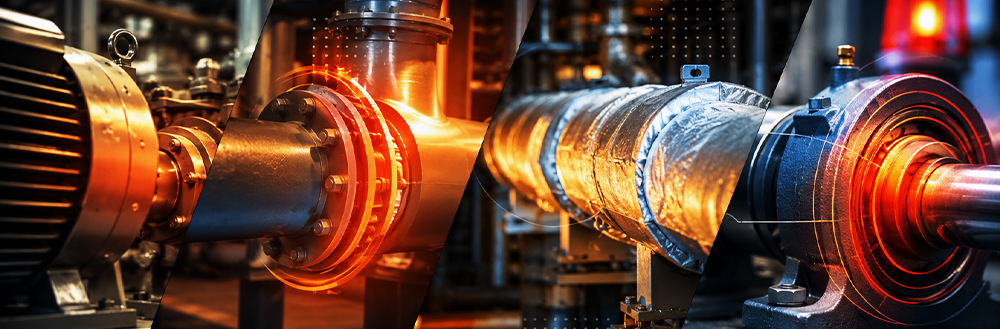
Potential Ignition Sources in Explosive Atmospheres
For a fire or explosion to occur in an explosive atmosphere,
in addition to a combustible substance and oxygen, an
ignition source with sufficient energy must be present.
The main ignition sources that may be encountered in industrial facilities include:
- Hot surfaces
- Flames and hot gases
- Mechanically generated sparks
- Electrical installations
- Electrical equalizing currents and cathodic protection systems
- Static electricity
- Lightning
- Electromagnetic waves (104 – 3 × 10¹¹ Hz)
- Electromagnetic waves (3 × 10¹¹ – 3 × 10¹⁵ Hz)
- Ionizing radiation
- Ultrasonic sound
- Adiabatic compression and shock waves
- Exothermic reactions and spontaneous ignition of dusts
Ignition Risk from Hot Surfaces

Under What Conditions Can Hot Surfaces Occur?
- In electrical equipment, such as lighting fixtures,
and in mechanical equipment, such as pumps - During normal operation; for example, in heat transfer oil systems, heat tracing
systems, or steam lines - Under fault conditions; for example, in bearings or motor windings
- During maintenance work such as welding, drilling, and grinding
- Under inadequate monitoring conditions, such as insufficient lubrication or dry running
When Does Ignition Due to a Hot Surface Occur?
- When the surface temperature
exceeds the ignition temperature of the gas, vapor, or dust cloud - When smoldering or overheating occurs in combustible dust layers
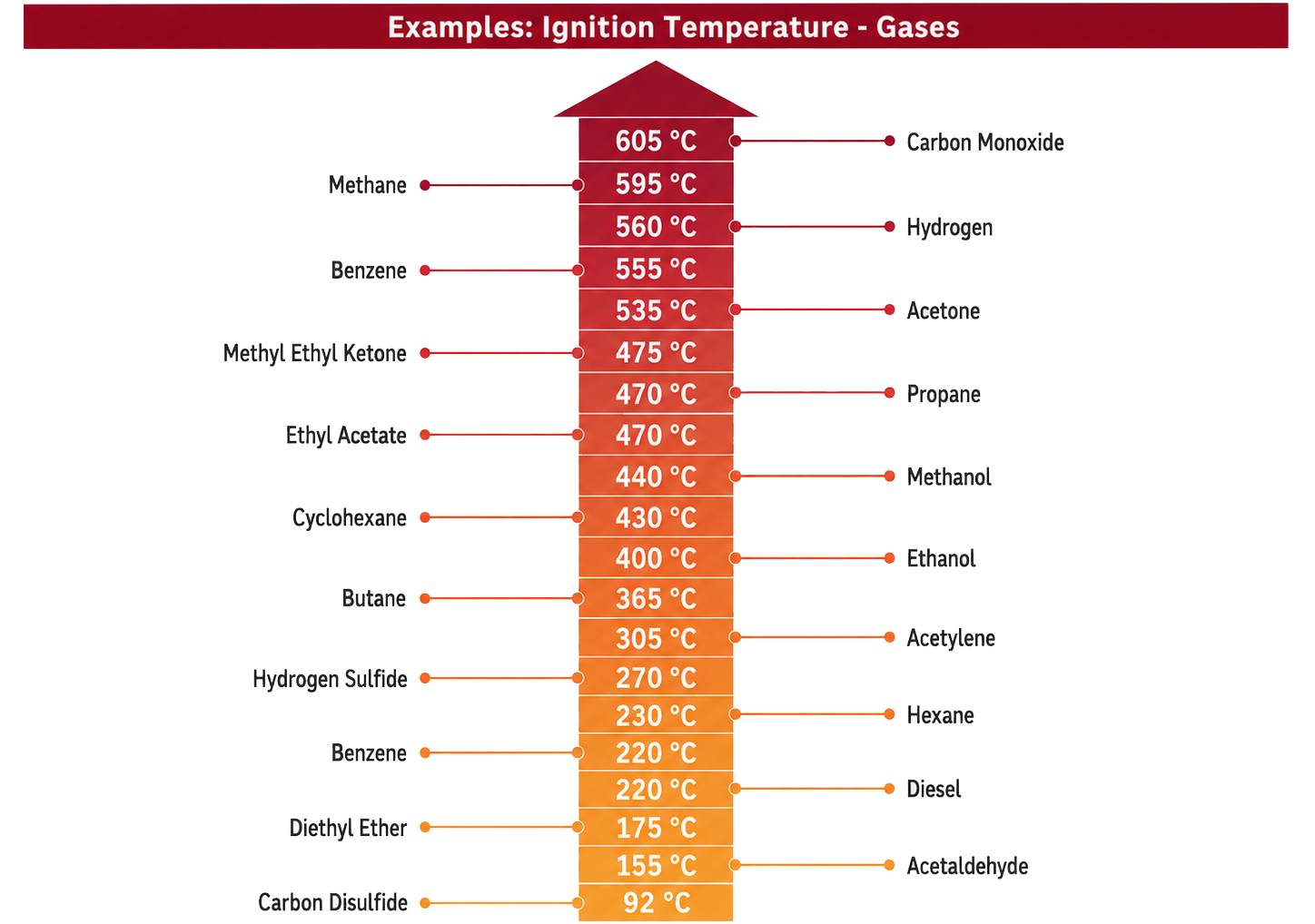
Combustible gases and vapors are divided into different
temperature classes according to their ignition temperatures.
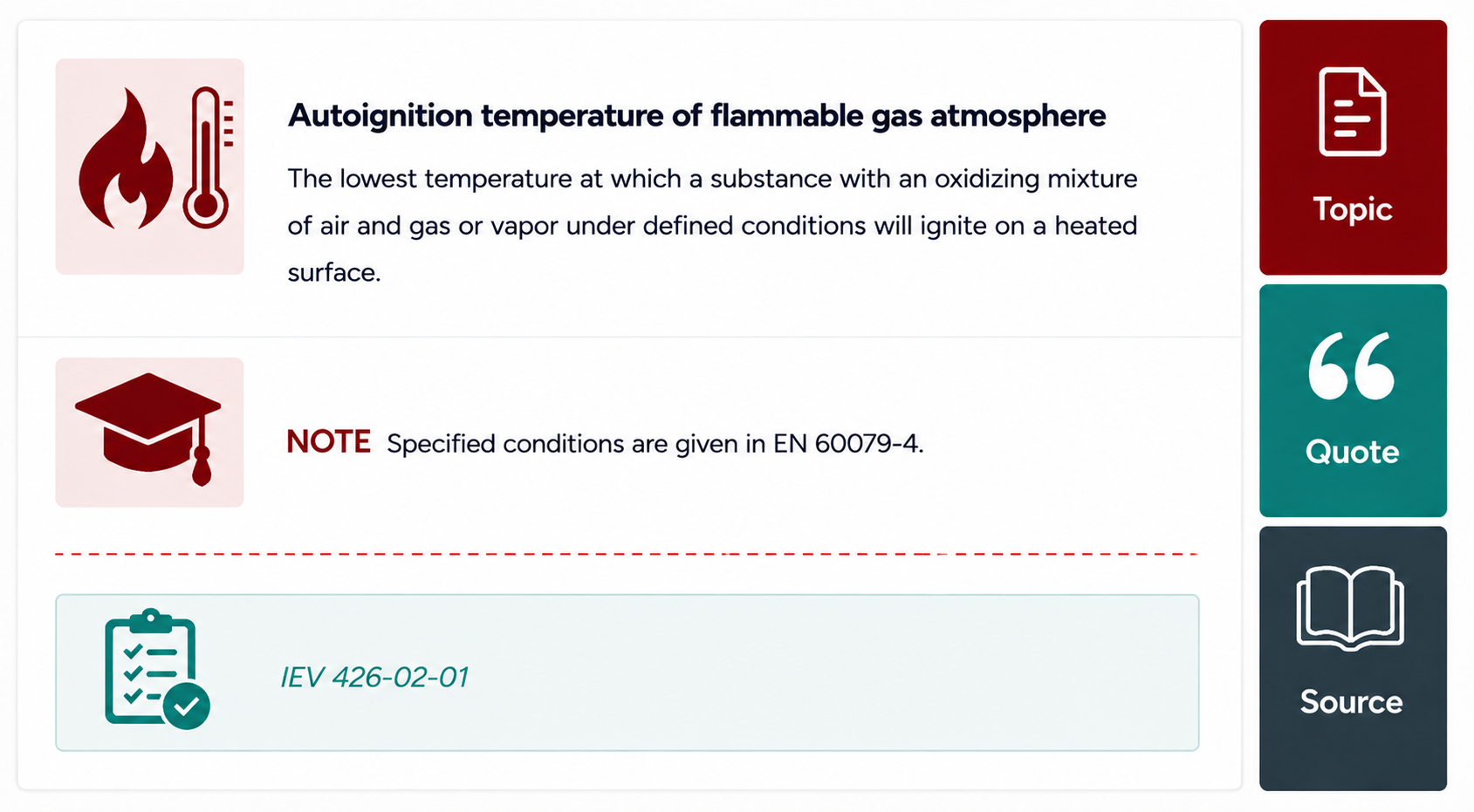
What Is Ignition Temperature?
Ignition temperature is related to the temperature at which a combustible gas,
vapor, or other combustible substance can be ignited by a hot surface
without an external flame or spark.
This value is critical when selecting equipment for explosive atmospheres.
Temperature Classes for Gases
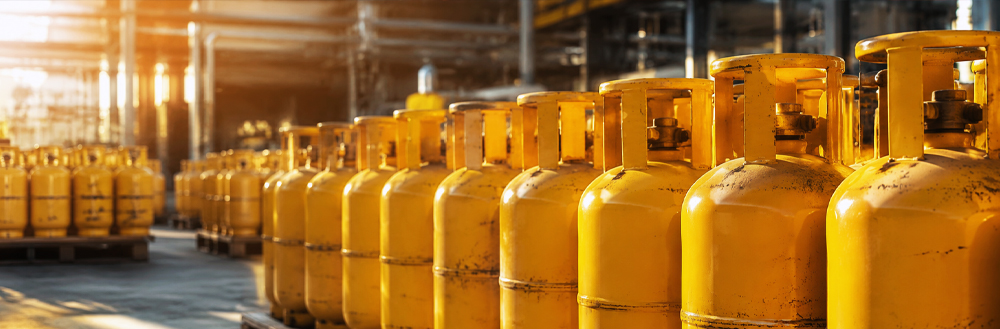
Combustible gases and vapors are divided into temperature classes according to their
ignition temperatures.
- The classification depends on the specific ignition temperature of the combustible substance.
- For gases and vapors, the T1, T2, T3, T4, T5, and T6 classes are used.
- Combustible dusts are not classified according to the T1–T6 temperature classes.
In dusty environments, actual surface temperatures and the ignition characteristics of the dust are taken into account.
Examples of Temperature Classes
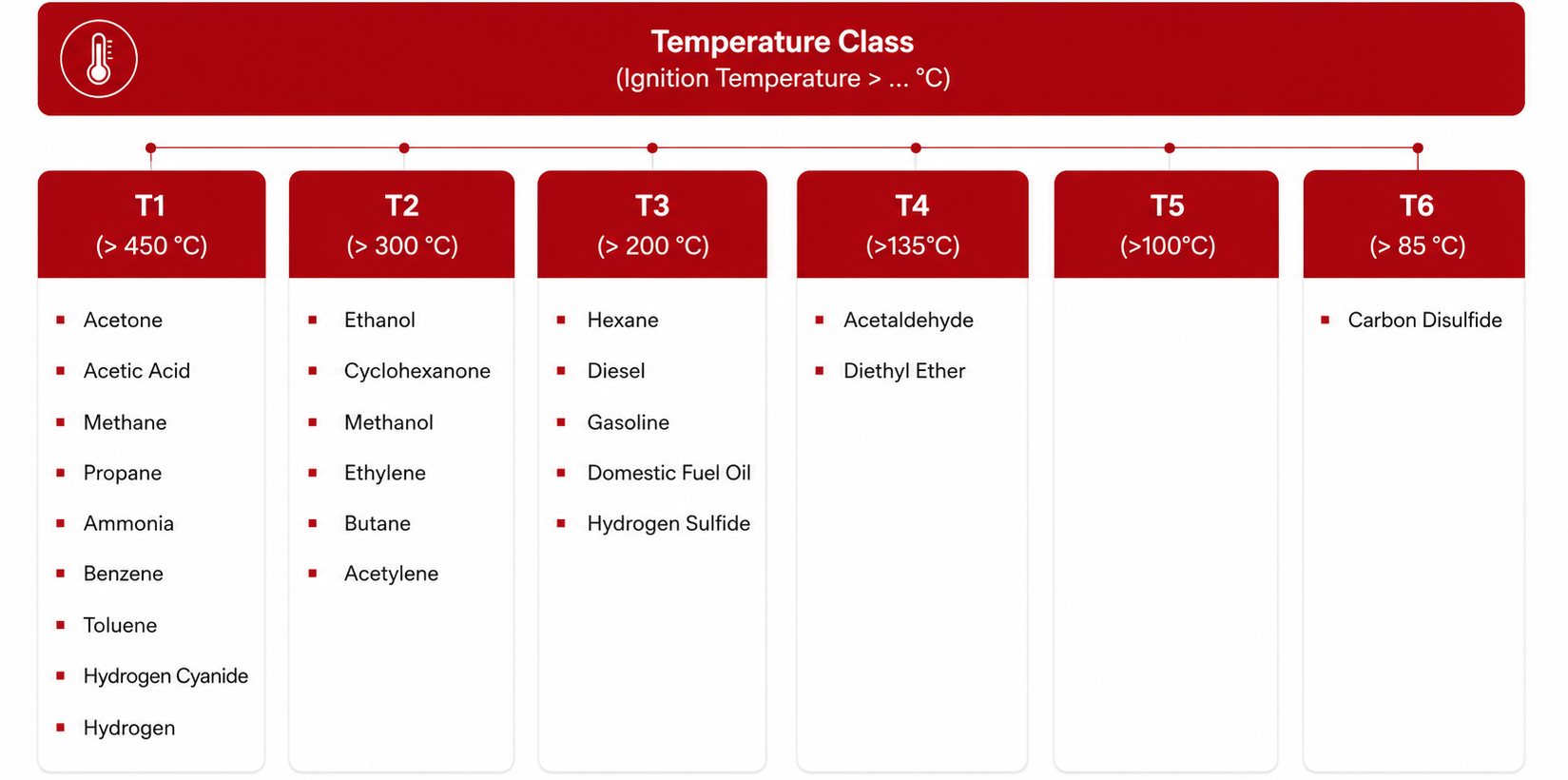
Temperature Classes and Ex Equipment Selection
Example: Solvent Storage Area
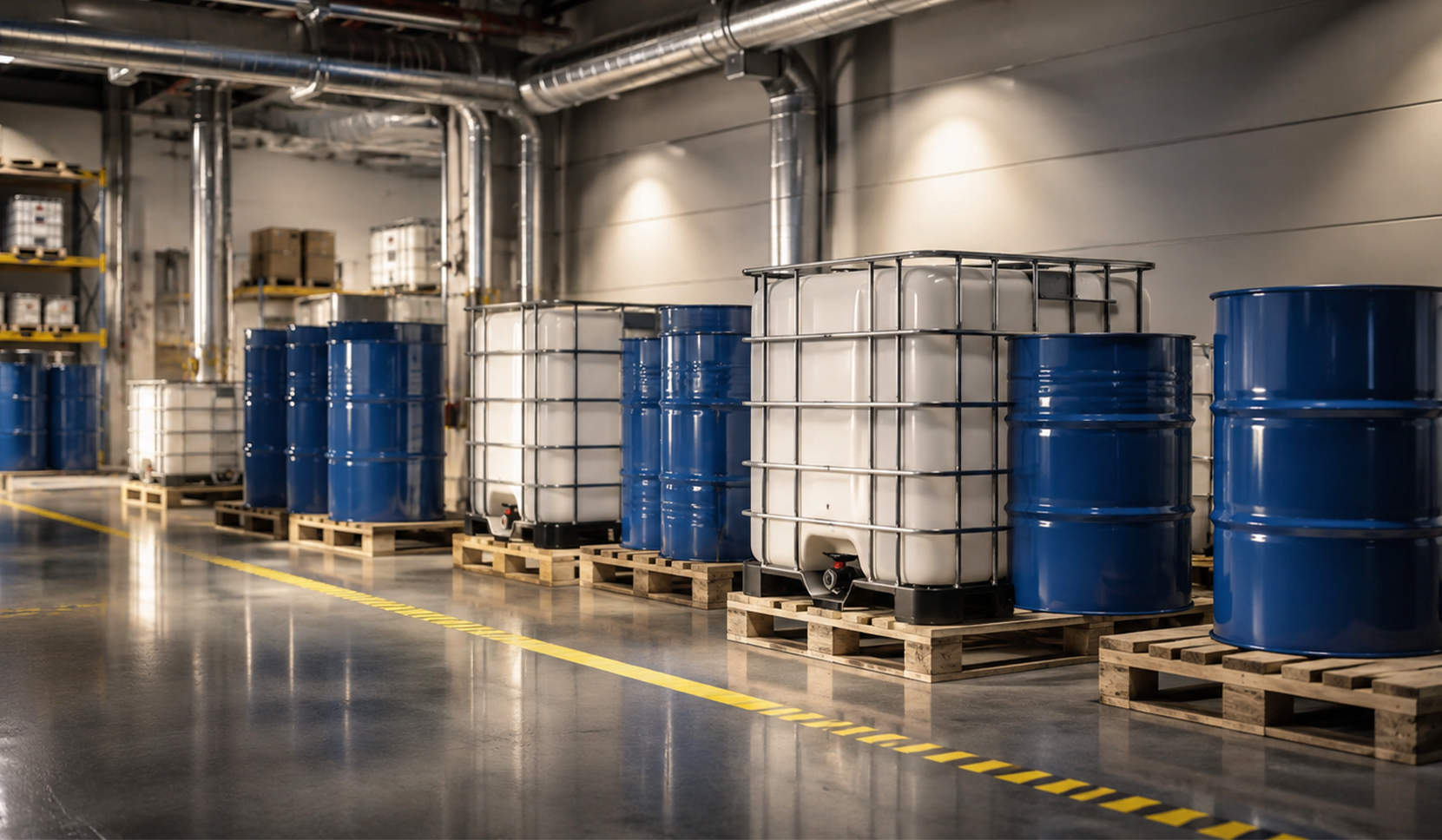
A combustible substance may, for example, be characterized by the
T4 temperature class. For T4-class equipment, the maximum surface
temperature is associated with 135 °C.
Therefore, the ignition temperature of the combustible substance and the maximum surface
temperature that the equipment can reach must be evaluated together.
Example: Ex-Proof Lighting Fixture
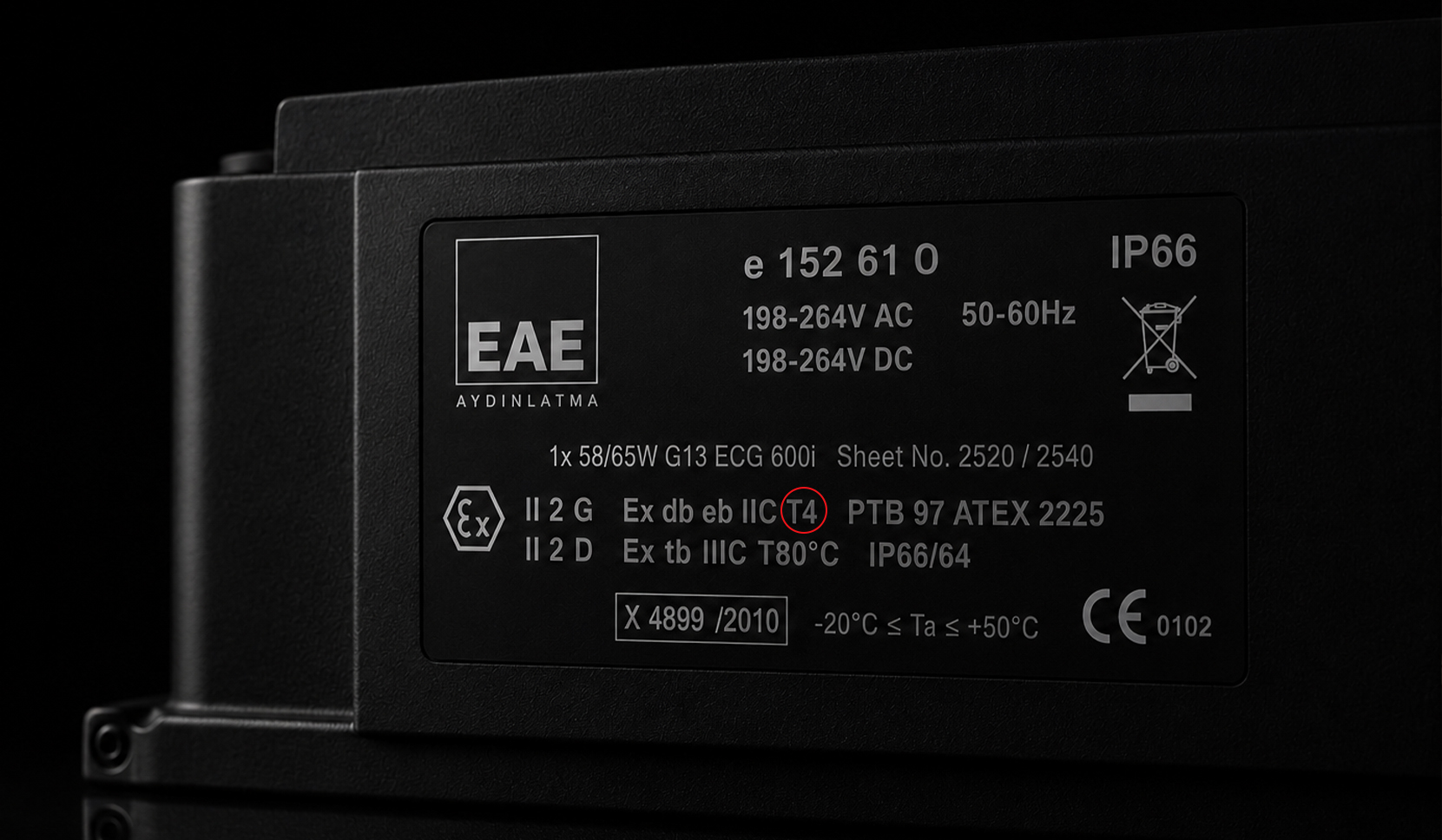
Ex equipment is characterized by its permitted maximum surface temperature.
For example, the maximum surface temperature of T4-class equipment
must not exceed 135 °C.
Characteristics of Combustible Dusts
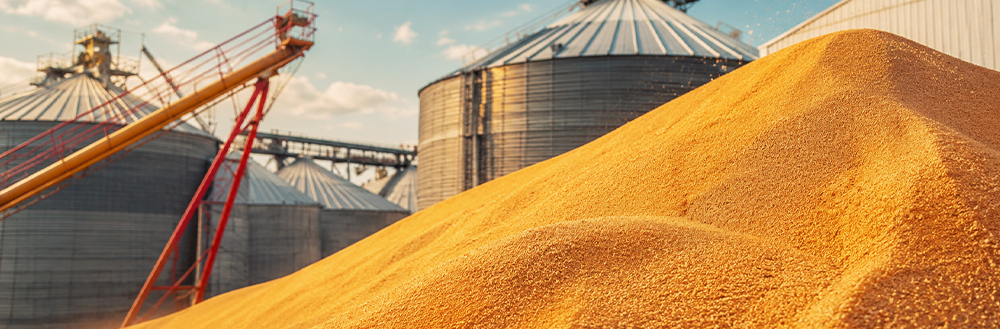
Small combustible dust particles can occur in two main forms in industrial environments:
- Combustible dust cloud dispersed in air
- Combustible dust layer accumulated on surfaces
The form in which the dust is present, its particle size, and other physical properties
can affect its ignition behavior and ignition temperature.
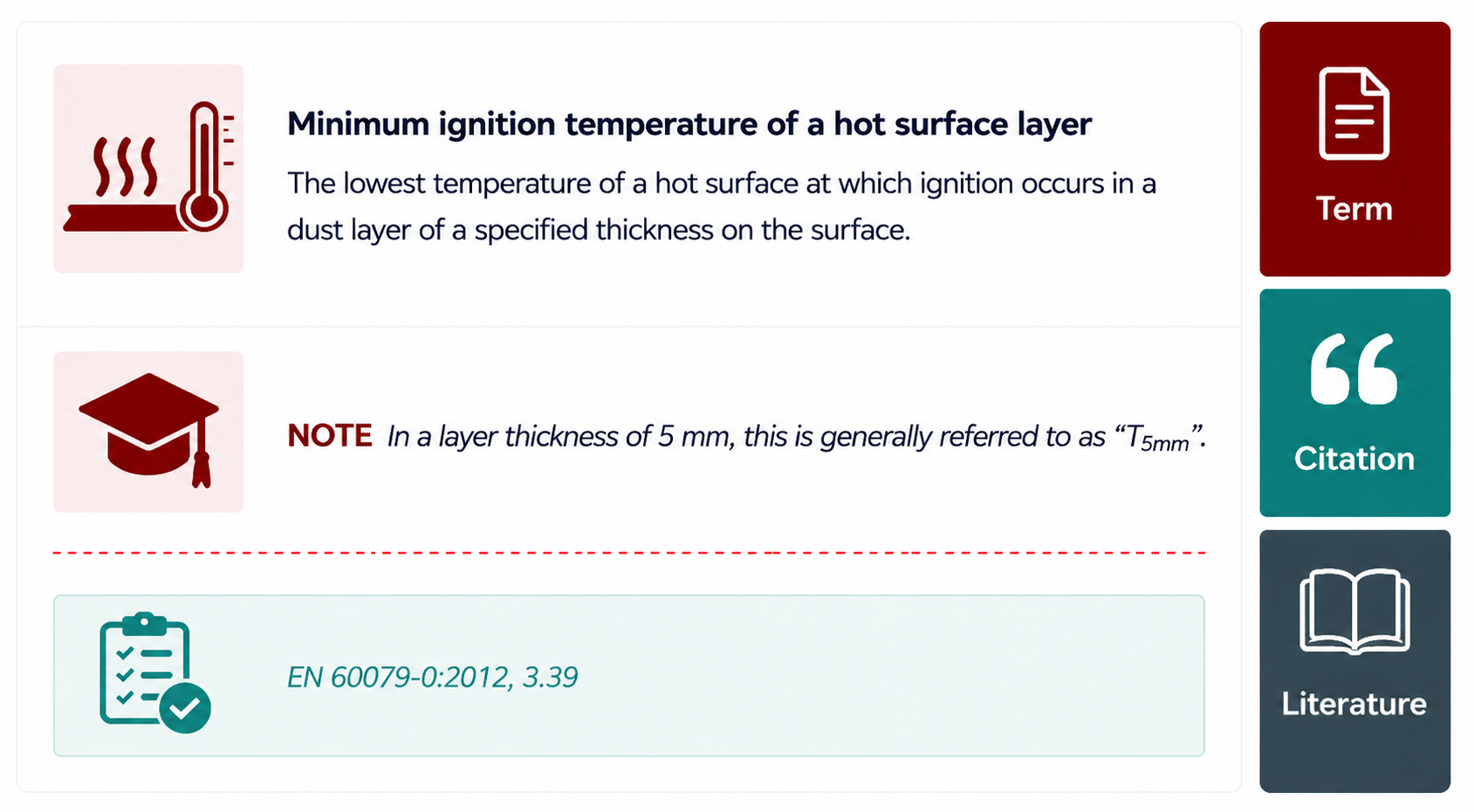
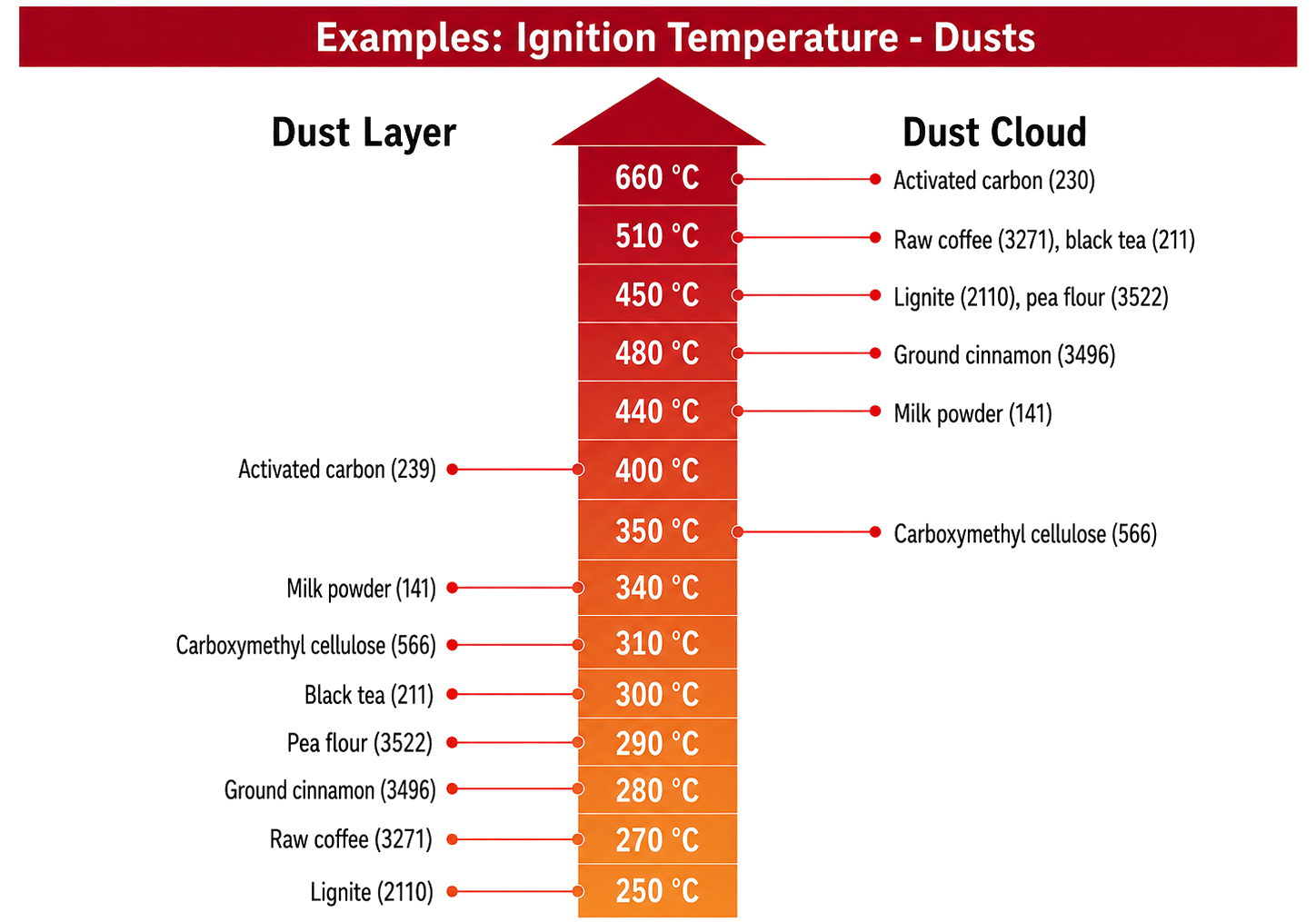
Ignition Temperature of a Dust Layer
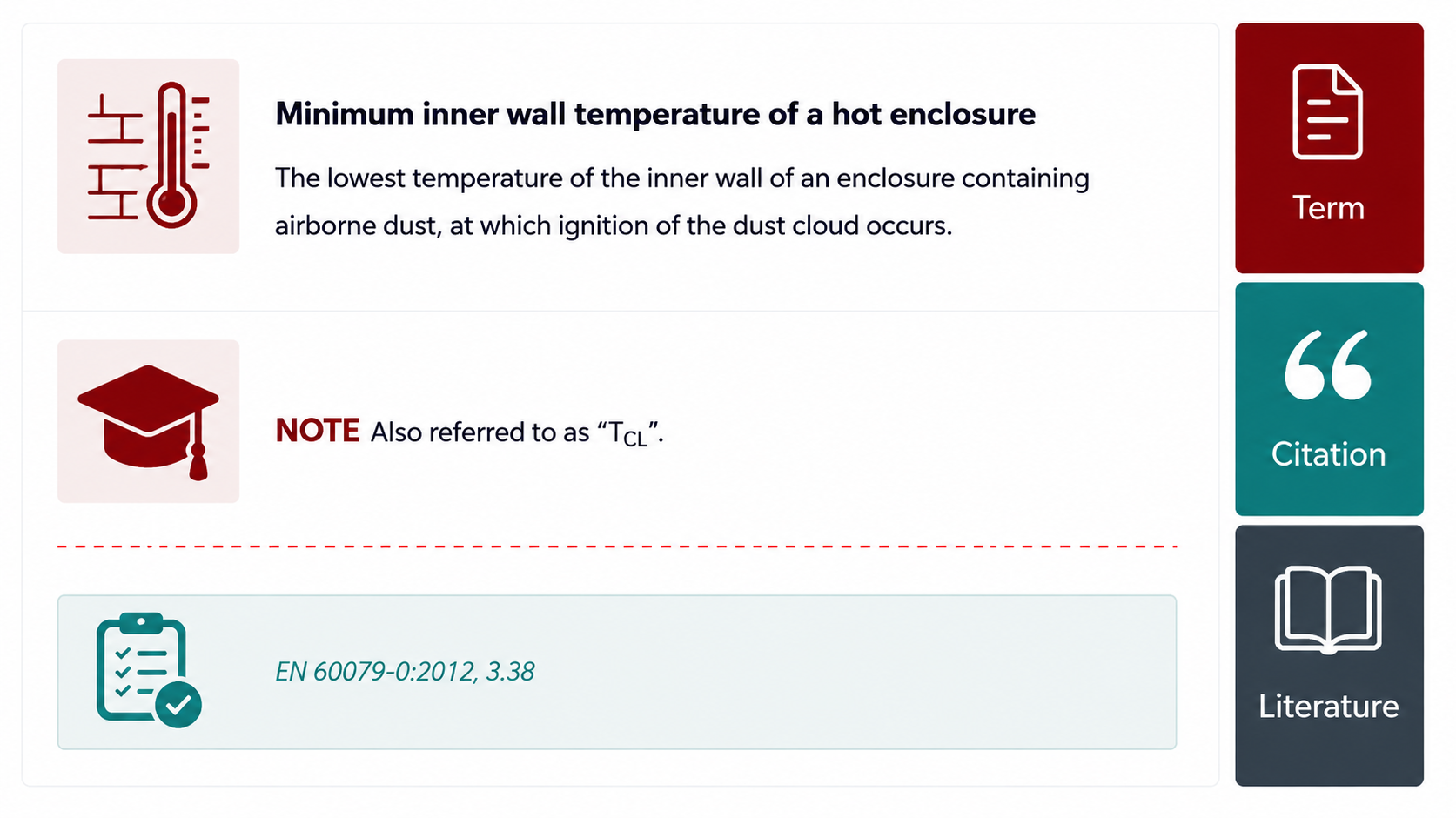
Ignition Temperature of a Dust Cloud
Surface Temperature and Equipment Selection for Combustible Dusts
Example: Flour Packaging Facility
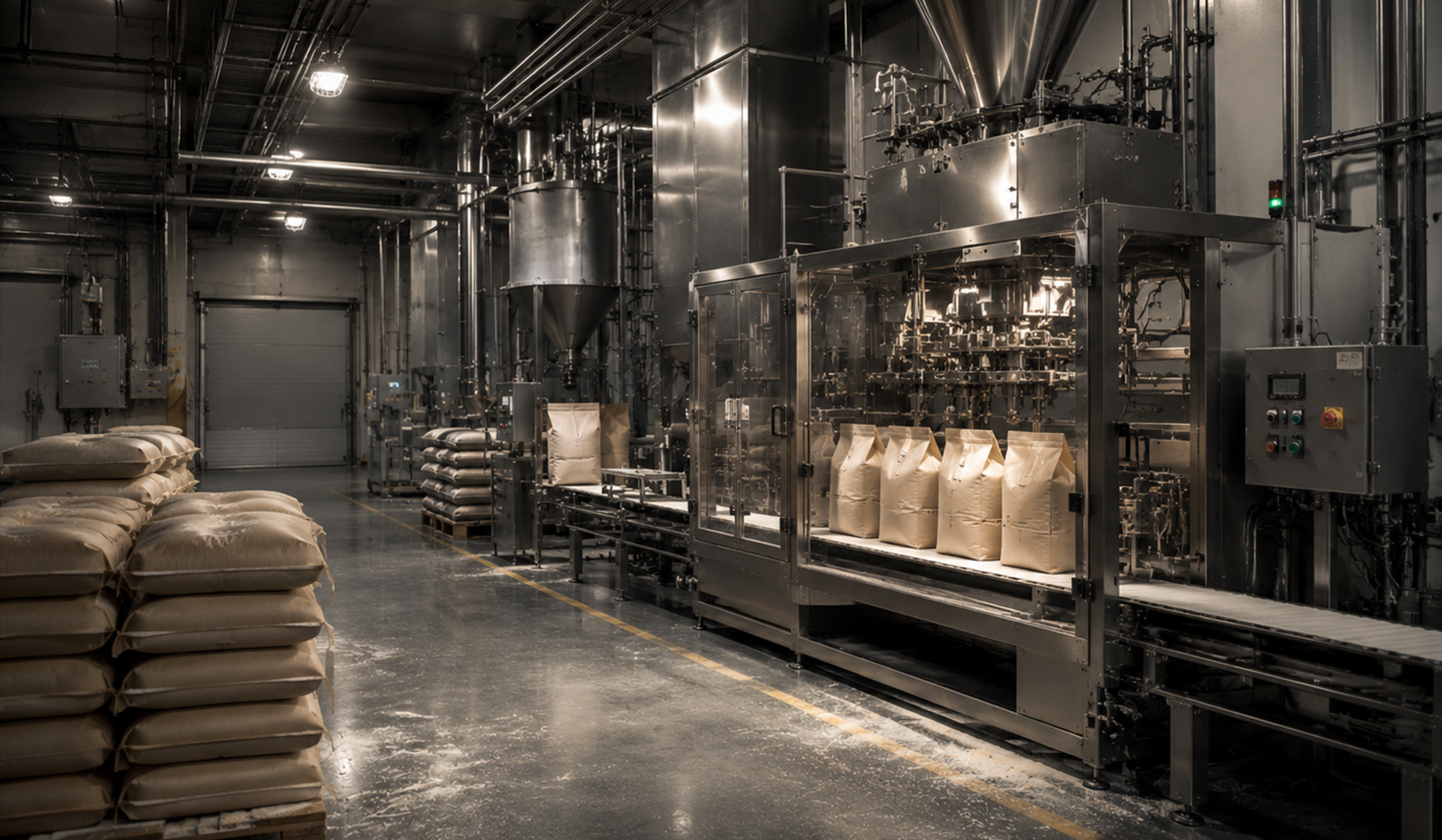
In environments where combustible dusts are present, two different ignition temperatures
must be taken into account:
- Ignition temperature of the dust layer
(for example, T5 mm = 300 °C) - Ignition temperature of the dust cloud
(for example, TCL = 460 °C)
Example: Ex-Proof Lighting Fixture for a Dusty Area
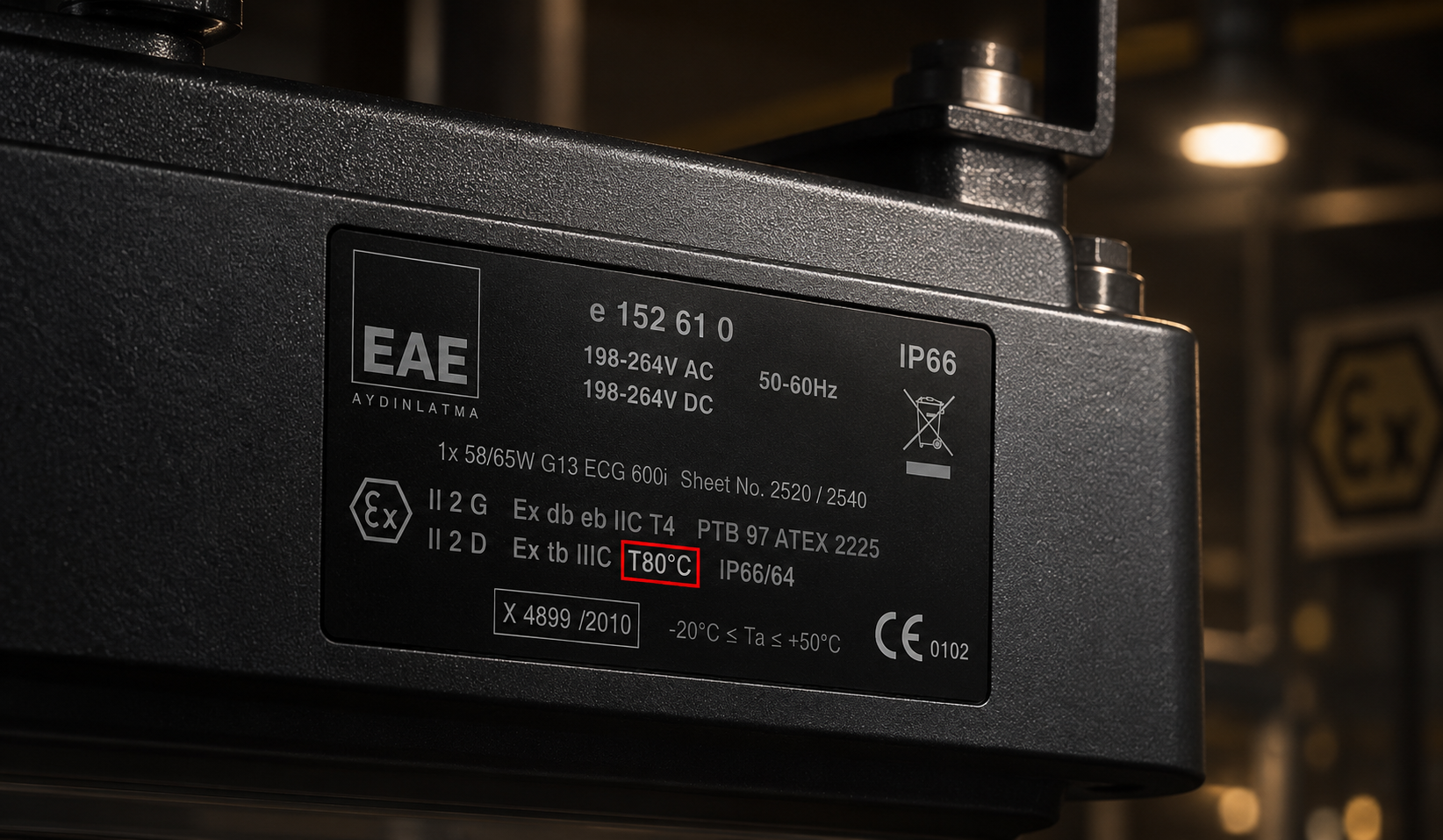
Equipment intended for use in dusty hazardous areas is marked with its
actual maximum surface temperature.
The required safety margins must be taken into account when selecting equipment.
Ignition Sources in Electrical Installations
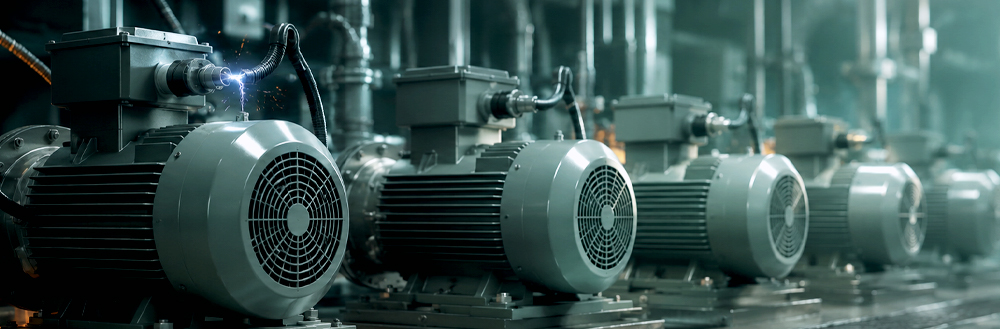
Electrical installations can act as ignition sources in explosive atmospheres in two main ways:
- Formation of hot surfaces above the permitted temperature
- Generation of electrical sparks with sufficient energy to cause ignition
When assessing the ignition risk from electrical sparks, combustible gases and
vapors are divided into gas groups according to their required
ignition energies and characteristics.
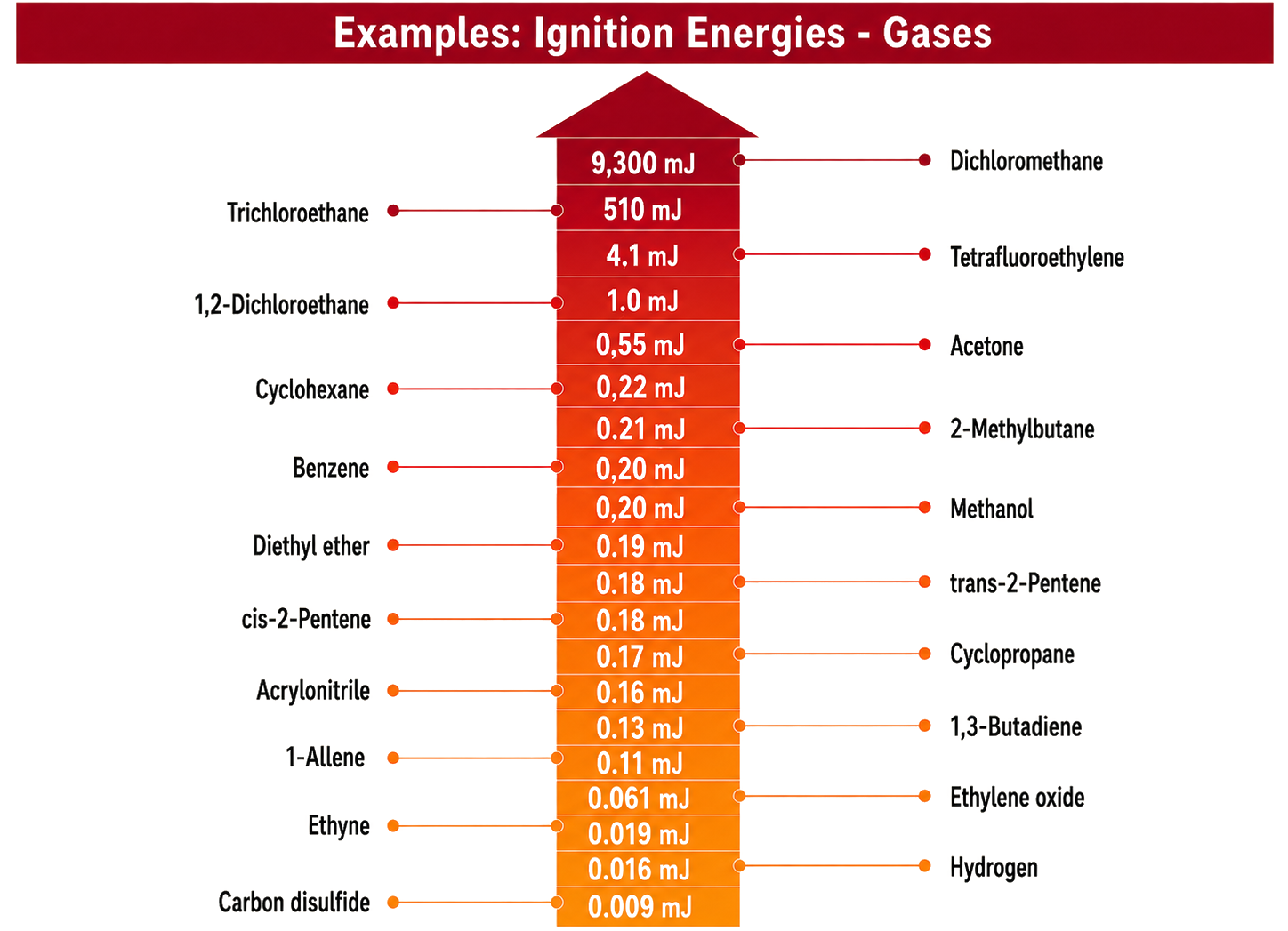
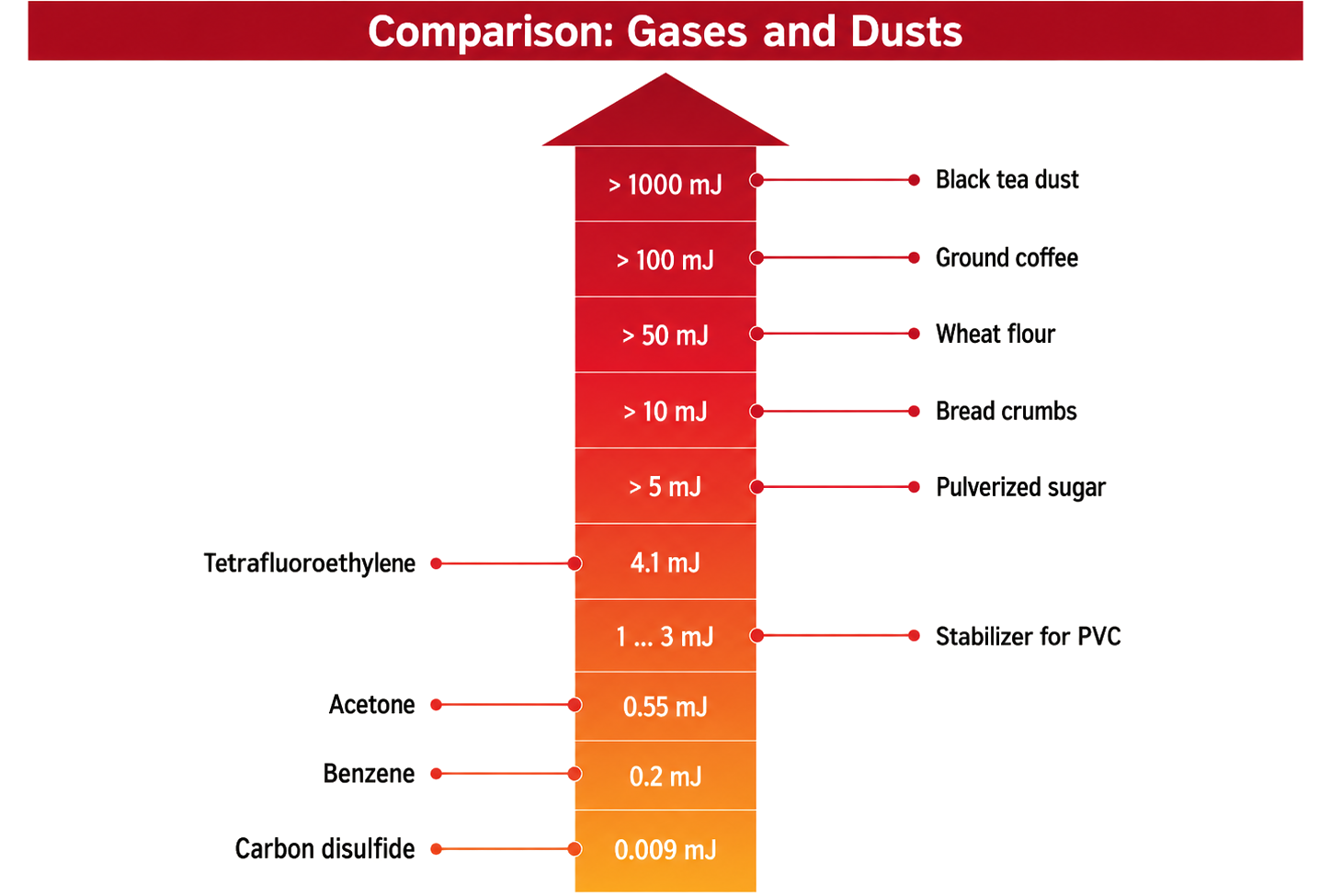
Gas Groups and Ignition Energies
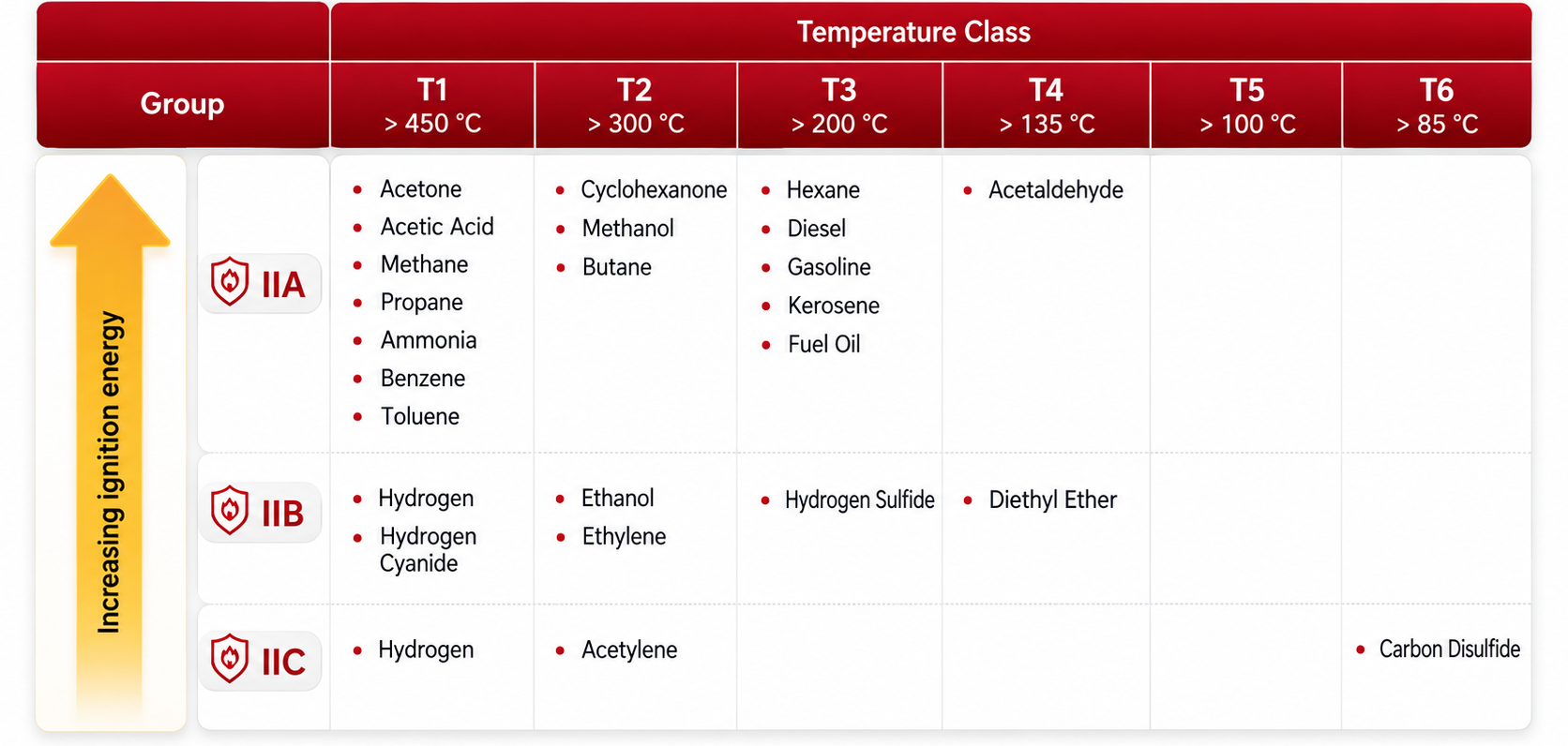
Ignition Energies and Ex Equipment
Example: Hydrogen-Cooled Power Plant Generator
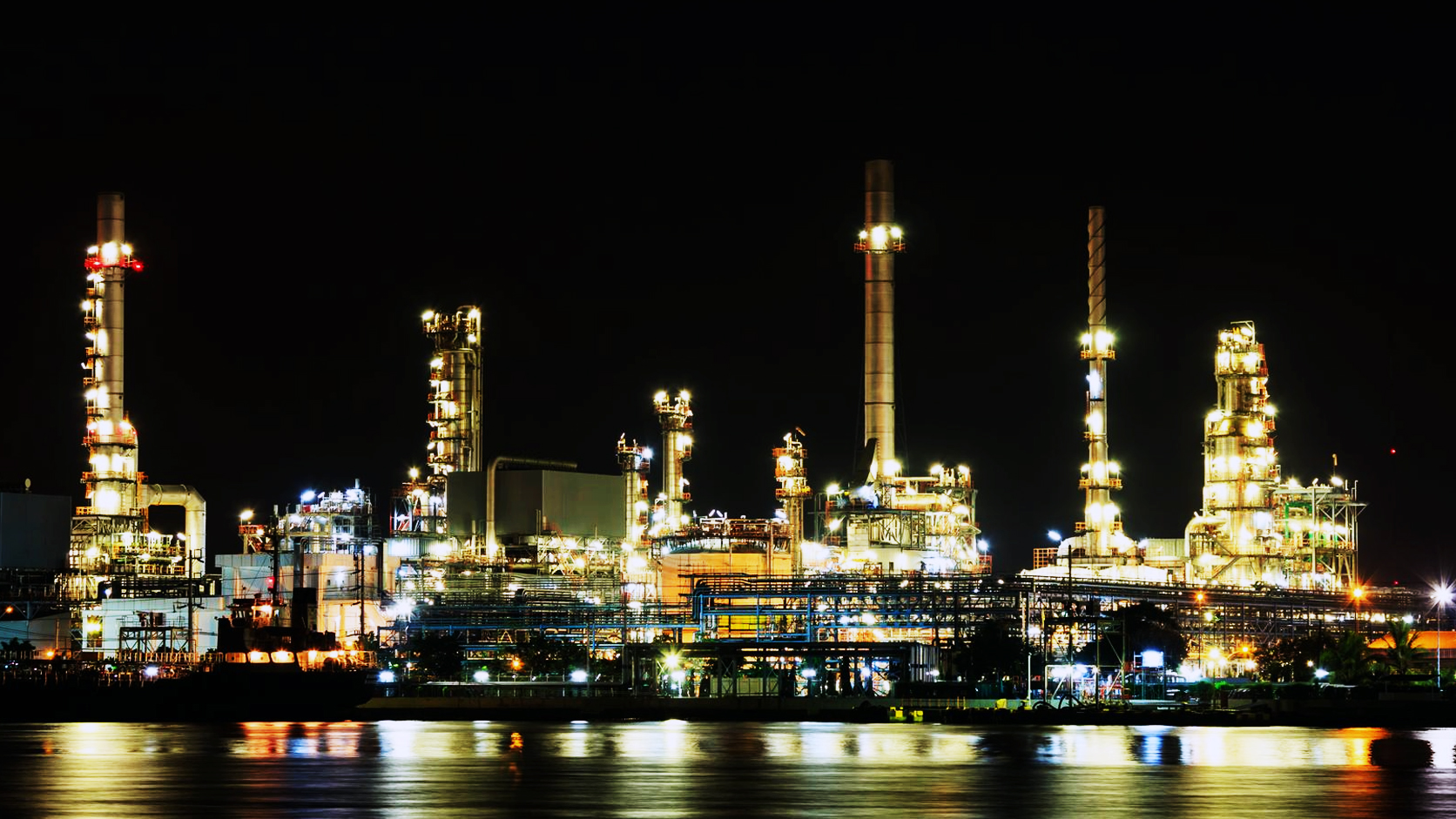
Some power plant generators are cooled with hydrogen.
Hydrogen is classified in the IIC gas group and has a very low
ignition energy.
Therefore, electrical equipment used in environments containing hydrogen must be selected
with consideration that even very low-energy sparks may cause ignition.
Example: Intrinsically Safe Barrier
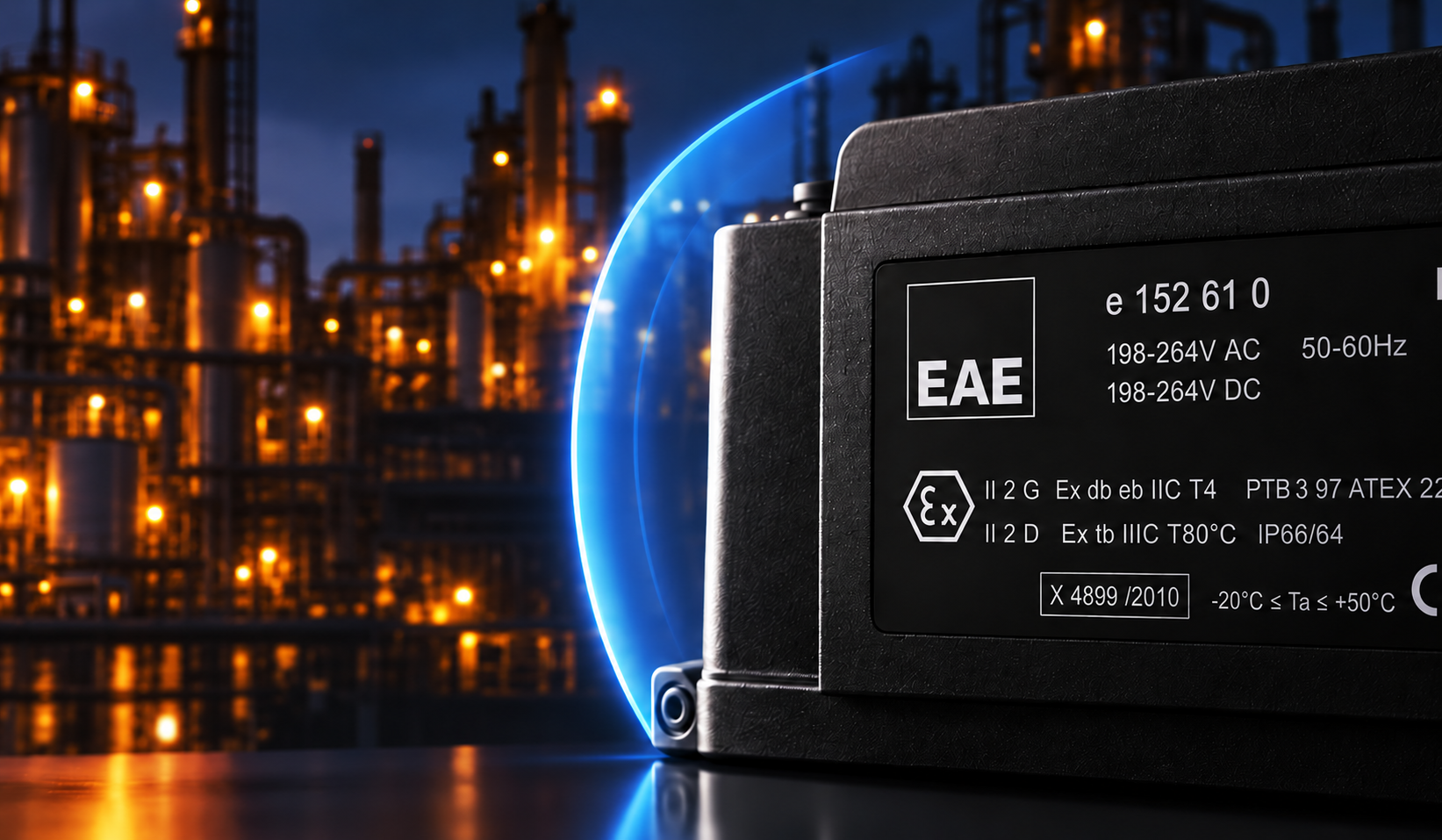
Intrinsically safe barriers help prevent spark energy from reaching
hazardous levels by limiting the voltage, current, and power in the circuit.
In a properly designed system, the possible spark energy is kept below the level
required to ignite combustible substances in the IIC group.
Mechanically Generated Sparks

Under What Conditions Can Mechanical Sparks Occur?
- When foreign objects enter moving parts;
for example, a stone entering a mill or a screw entering a fan - As a result of using hand tools during maintenance, repair, or installation work
When oxidizable materials are present or an intense
shower of sparks occurs, the ignition risk may increase.
Static Electricity and Explosion Risk

Static electricity can occur as a result of electrical charges
accumulating on a surface or material. In explosive atmospheres,
the sudden discharge of these charges may act as an ignition source.
Under What Conditions Can Static Electricity Occur?
- During normal operation of facilities; for example, in films passing over rollers
or liquids flowing through pipes - During cleaning activities such as wiping surfaces
- When people are walking
- When materials come into contact, separate, are transferred, or rub against each other
To reduce risks caused by static electricity in explosive atmospheres,
it is important to apply appropriate grounding, equipotential bonding, and electrostatic charge control
methods.