

Combustible Materials and Their Classification
Proper classification of combustible materials is of great importance for
identifying explosive atmosphere risks
and selecting appropriate Ex-proof equipment.
Combustible and Non-Combustible Materials
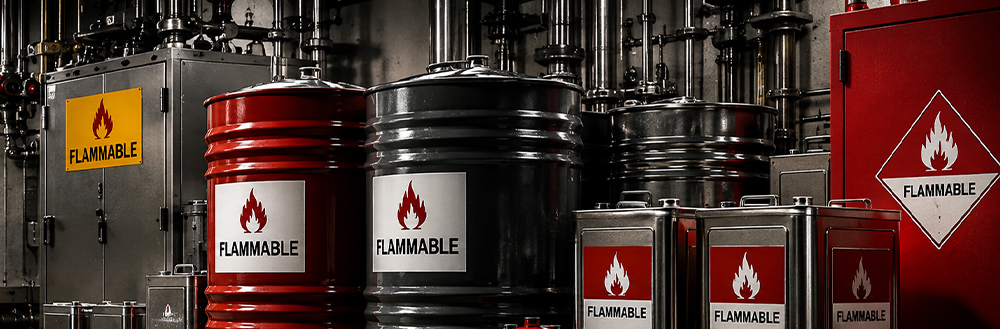
- Combustible materials: Materials that can ignite, such as coal, paper, gasoline, natural gas, and hydrogen.
- Non-combustible materials: Materials that do not burn under normal conditions, such as concrete, sand, metal, water, and nitrogen.
When evaluating materials, not only their chemical properties but also
their physical form and environmental conditions should be taken into consideration.
Classification of Equipment and Combustible Materials
Equipment used in explosive atmospheres and combustible materials are classified
according to the groups defined in the EN IEC 60079 series of standards.
This classification ensures that the environment in which the equipment will be used is correctly identified.
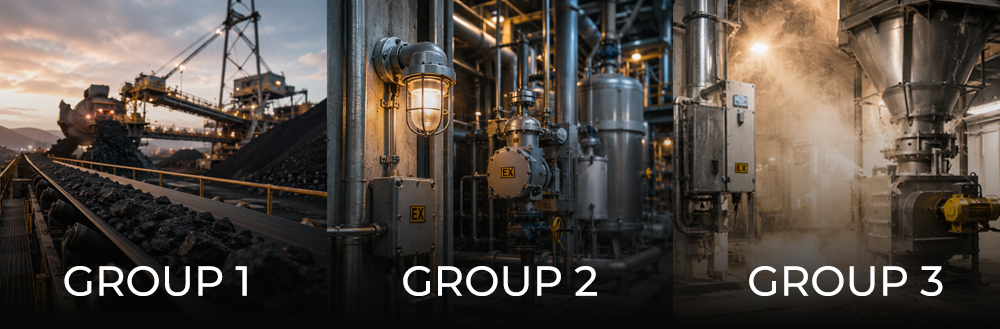
- Group I: Covers equipment used in mines and mining applications.
- Group II: Covers non-mining applications where combustible gases or vapors are present.
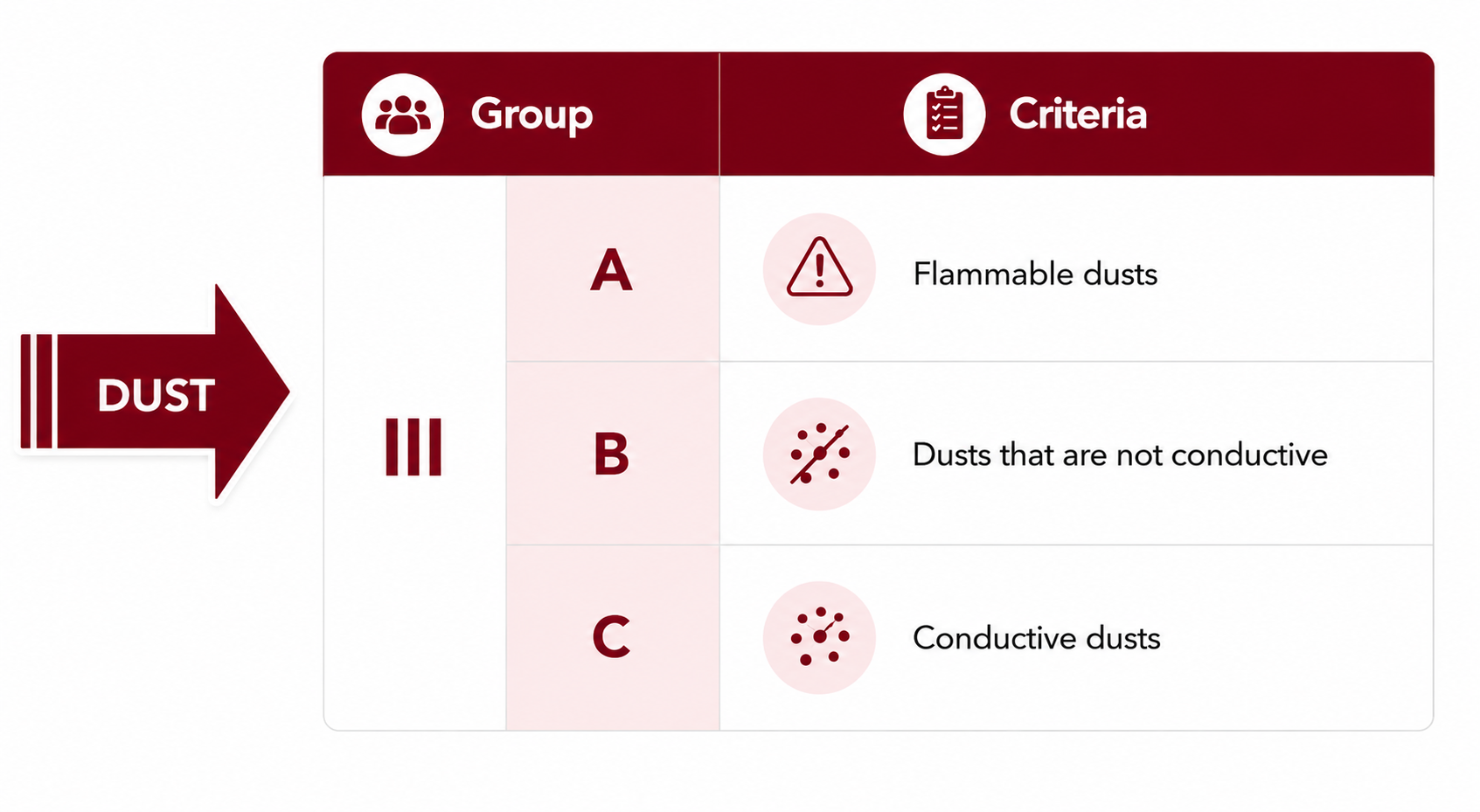
Group II is divided into the IIA, IIB, and IIC subgroups. - Group III: Covers non-mining applications where combustible dust is present.
Group III is divided into the IIIA, IIIB, and IIIC subgroups.
For the criteria used to determine the A, B, and C subgroups,
refer to the explanations in the Ignition of Explosive Atmospheres section.
Classification of IIIA, IIIB, and IIIC Dust Groups
What Are Flammable Volatile Substances?
Flammable volatile substances are materials that can evaporate under normal operating or ambient conditions and,
when mixed with air, form a flammable or explosive atmosphere.
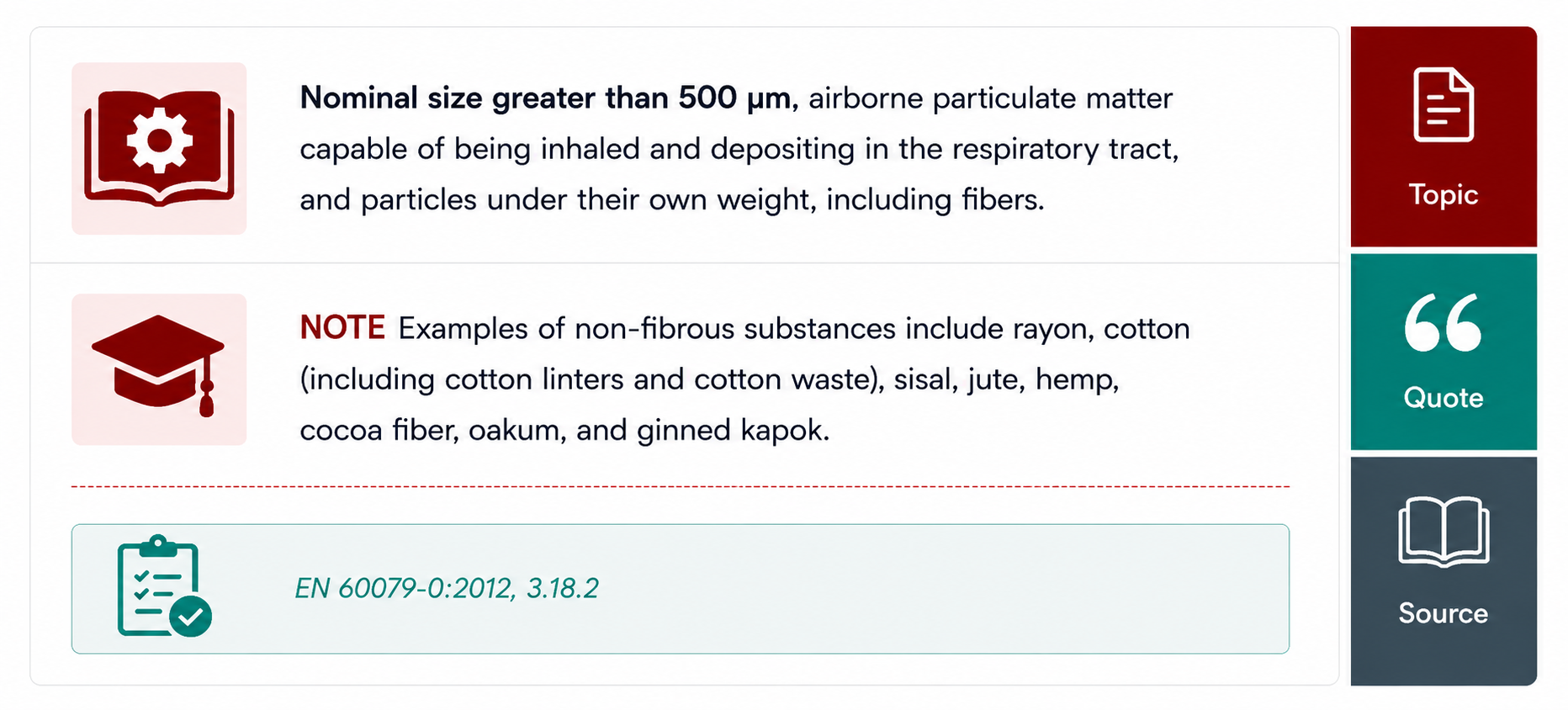
What Is Conductive Dust?
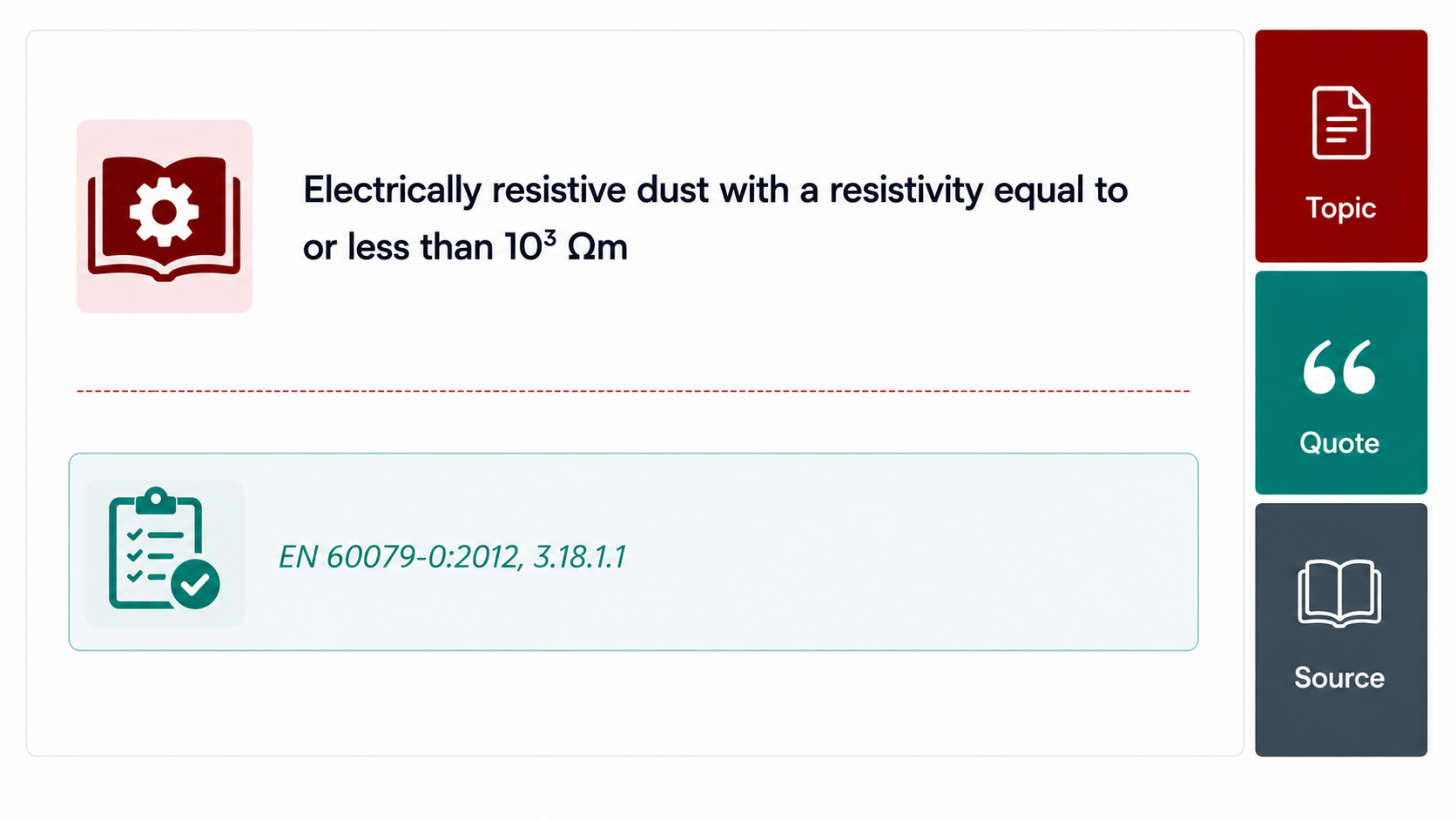
Conductive dusts are combustible dusts that may create additional risks for electrical equipment
due to their electrical conductivity. Therefore, when selecting equipment for dusty explosive atmospheres,
the electrical properties of the dust must also be evaluated.
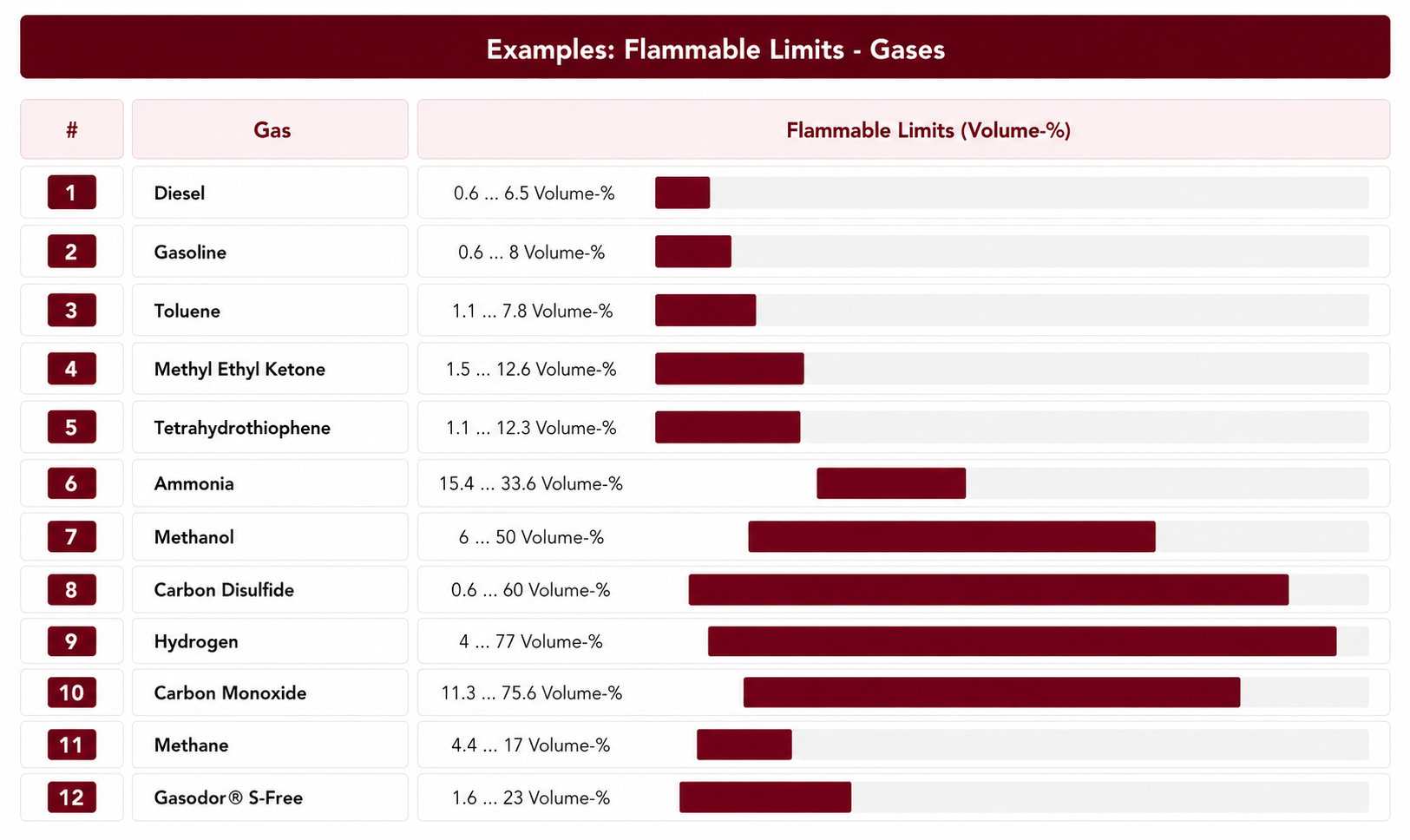
What Are Explosion Limits?
The concentration of combustible gases, vapors, or dusts in air
is one of the key factors determining whether an explosion can occur.
- Explosions can occur only within the
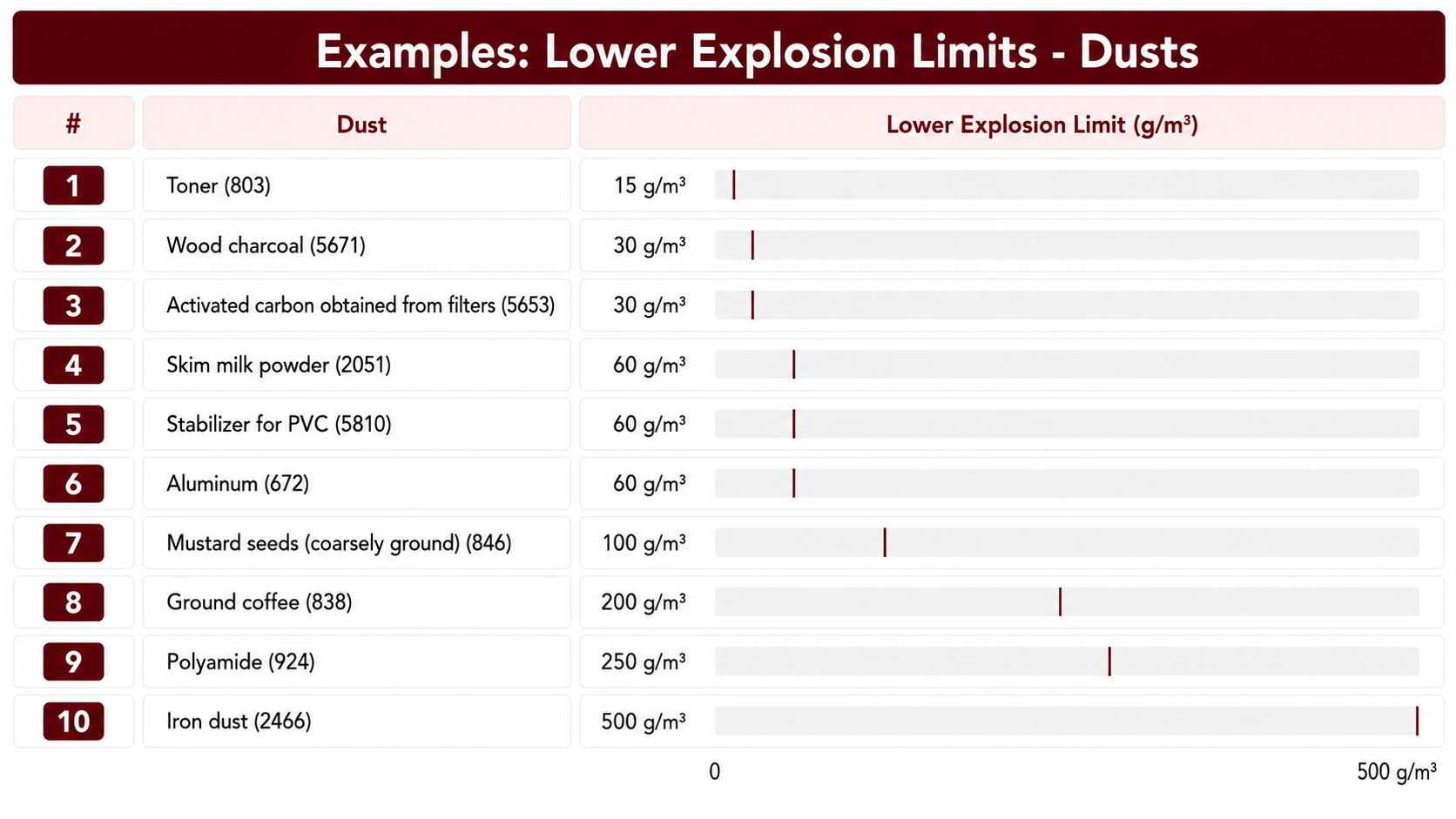
explosion limits specific to the combustible substance concerned. - For combustible dusts, the concentration in air may vary significantly due to settling, accumulation, and resuspension.
- Under non-atmospheric pressure and temperature conditions,
the explosion limits may vary.
Lower Explosion Limit (LEL) and Upper Explosion Limit (UEL)
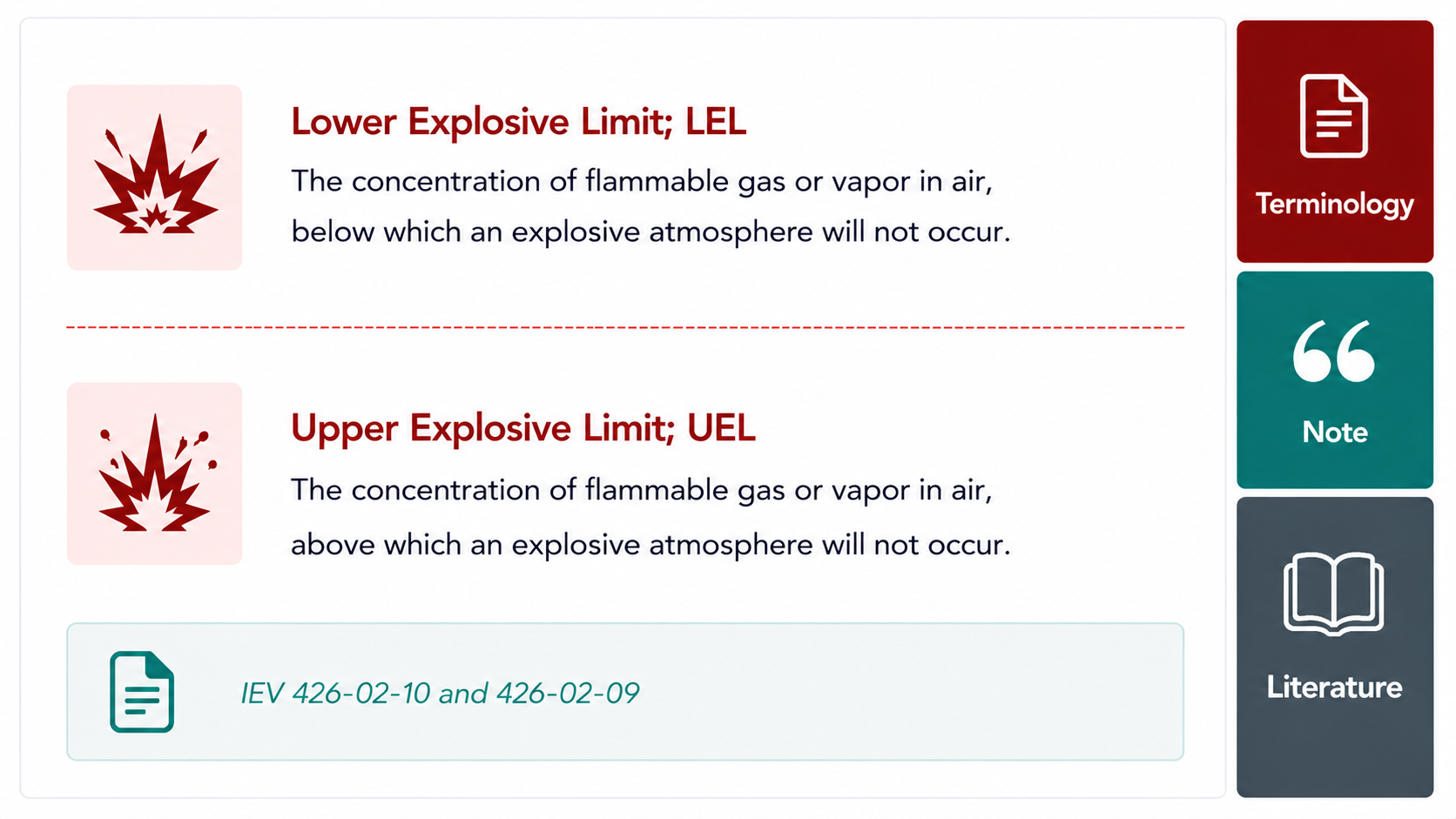
The Lower Explosion Limit (LEL) refers to the lowest concentration of a combustible gas or vapor
in air at which an explosion can occur.
The Upper Explosion Limit (UEL) refers to the highest concentration
at which an explosion can occur.
Hazardous Quantity in an Explosive Atmosphere

The quantity of an explosive atmosphere is one of the important criteria in an
explosion risk assessment.
- Regardless of the room volume, approximately 10 liters of explosive atmosphere
may be considered a hazardous quantity. - In small-volume spaces, even an explosive atmosphere corresponding to
one ten-thousandth of the room volume (0.01%)
should be taken into consideration. - If an explosive atmosphere forms in the immediate vicinity of people,
even smaller quantities may be critical.
Explosive Atmosphere Example: Gasoline
Gasoline Evaporation and Explosion Risk
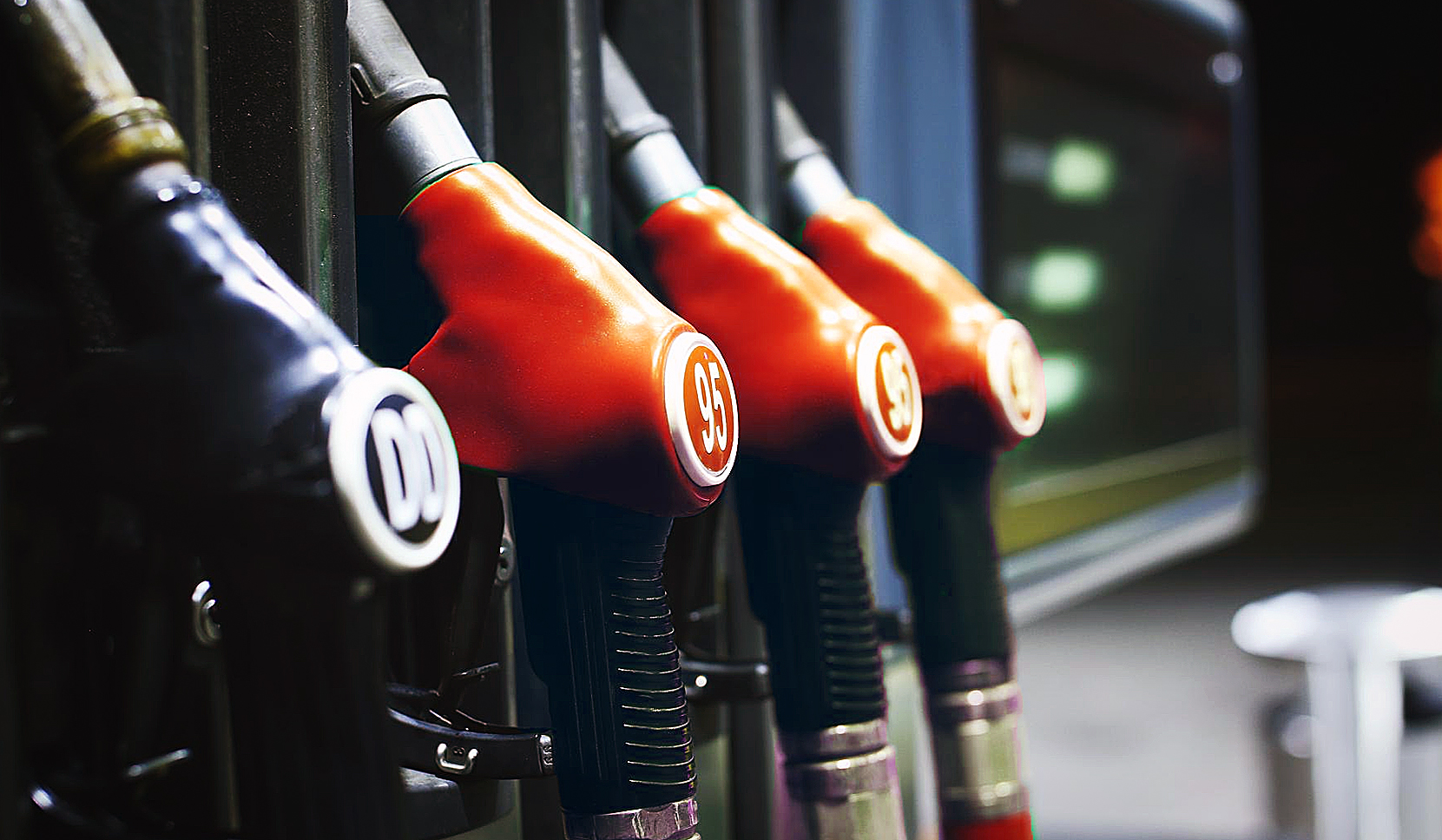
Due to its high volatility, gasoline can generate a significant amount of flammable vapor
even in small quantities. When gasoline vapor mixes with air in suitable proportions,
an explosive atmosphere may form.
- Explosion limits: approximately 0.6%–8.0% by volume.
- 1 liter of liquid gasoline can generate approximately 196 liters of gasoline vapor.
- At the LEL concentration, approximately 32,700 liters of explosive atmosphere
may be formed. - At the UEL concentration, approximately 2,450 liters of explosive atmosphere
may be formed. - Even approximately 0.3 ml of liquid gasoline can, under suitable conditions,
form approximately 10 liters of explosive atmosphere.
This example demonstrates why even very small quantities of flammable liquids can create
a serious explosion and fire risk in enclosed or inadequately ventilated areas.