

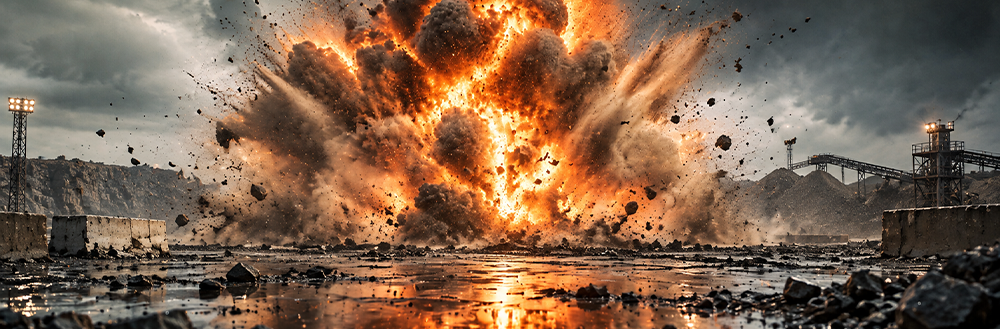
Characteristic Values of Explosions
The behavior of explosive gas, vapor, or dust mixtures can be determined
through tests carried out using suitable test apparatus.
These tests are important for understanding the severity of an explosion
and its propagation characteristics.
Key Parameters Examined in Explosion Tests
- Propagation velocity
- Explosion pressure
- Rate of pressure rise
- Explosion propagation behavior through small gaps
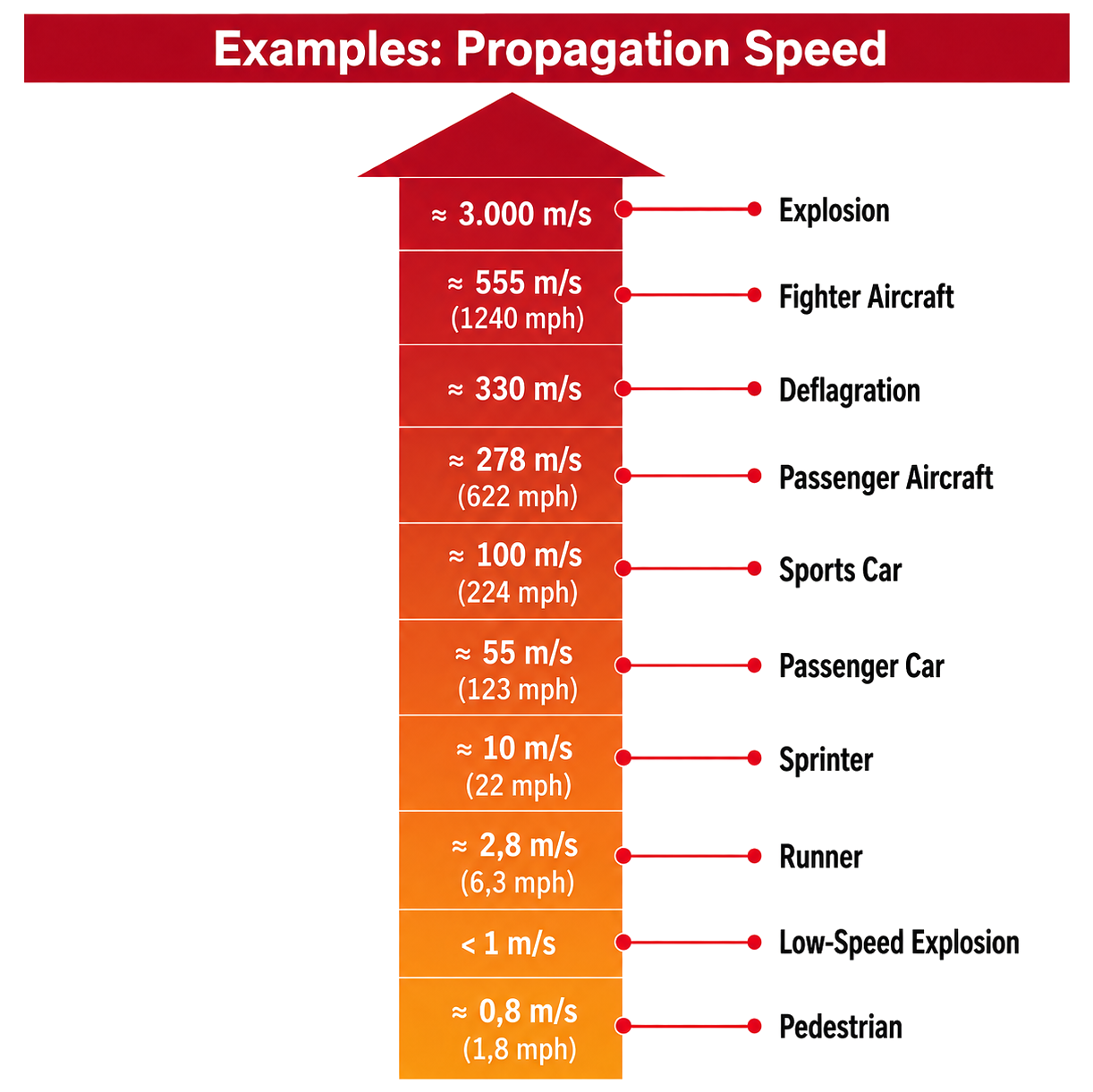
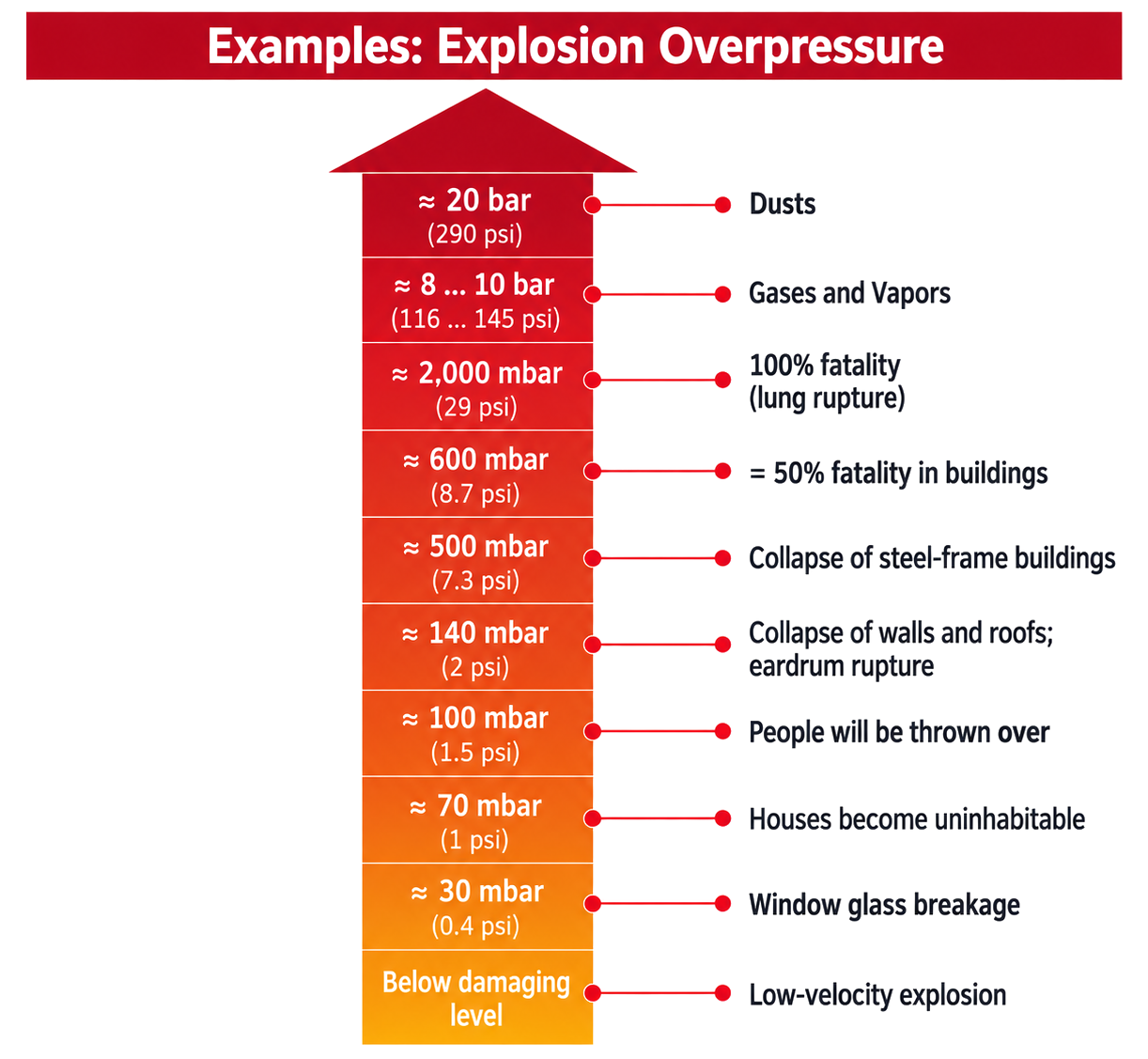
Explosion Propagation Through Gaps
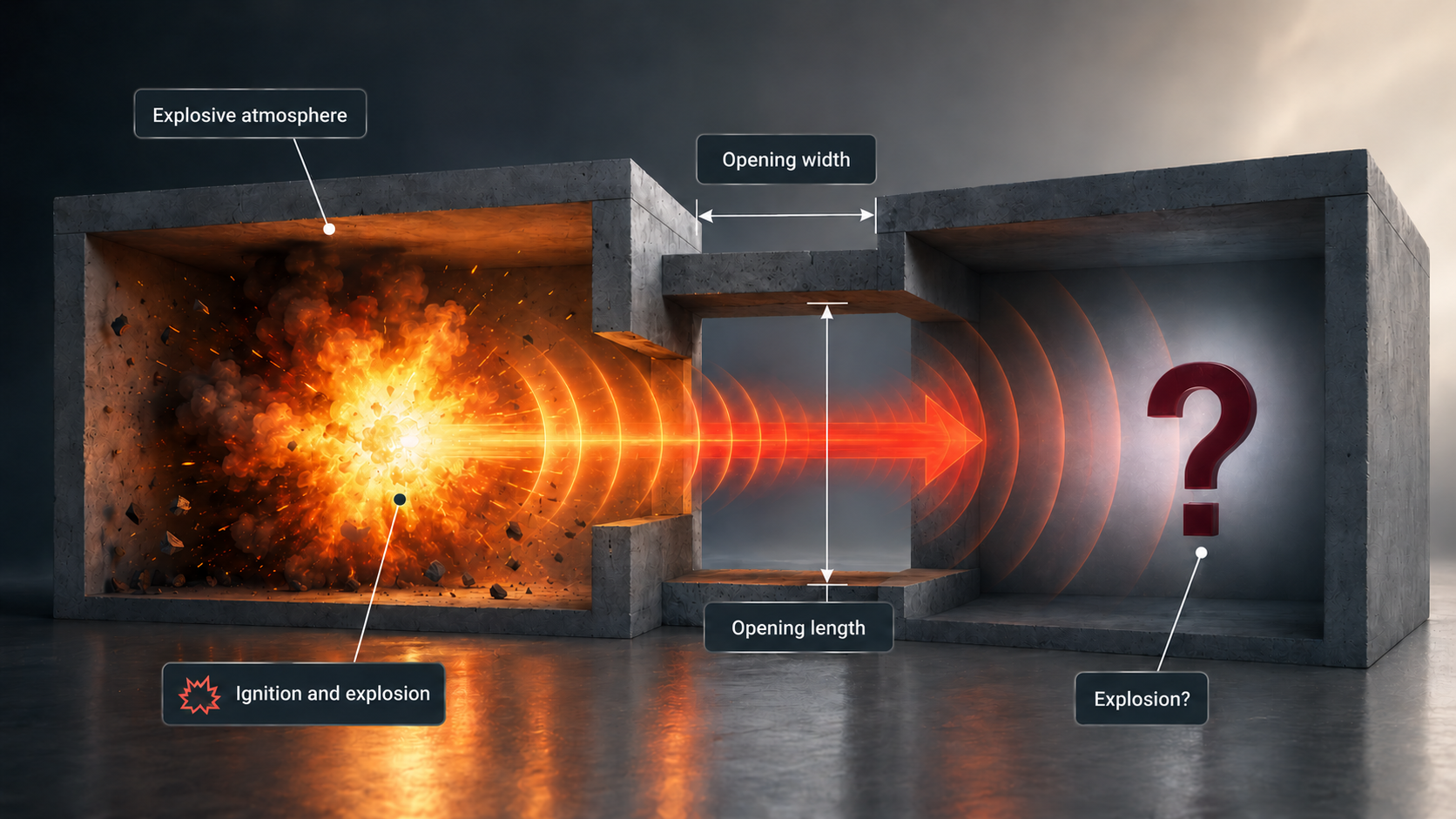
Hot gases and flames generated during an explosion may propagate into the surrounding atmosphere
through openings or joint surfaces in the equipment.
This behavior is particularly critical in the design of
flameproof Ex equipment.
Gap Width and Gas Groups

Ignition tests conducted with different combustible gases and vapors
show that explosions can propagate through certain substance-specific gap widths.
This characteristic is used to classify combustible gases and vapors
according to their
Maximum Experimental Safe Gap (MESG)
values.
The MESG value is an important criterion, particularly for determining the
IIA, IIB, and IIC gas groups
and selecting suitable Ex equipment.
What Is MESG?
MESG (Maximum Experimental Safe Gap) is related to the limiting gap value
that prevents an explosion, under controlled test conditions, from passing through a specified gap
and igniting the explosive mixture in the external atmosphere.
Because combustible gases have different MESG values,
they are divided into the IIA, IIB, and IIC groups
according to their explosion behavior.
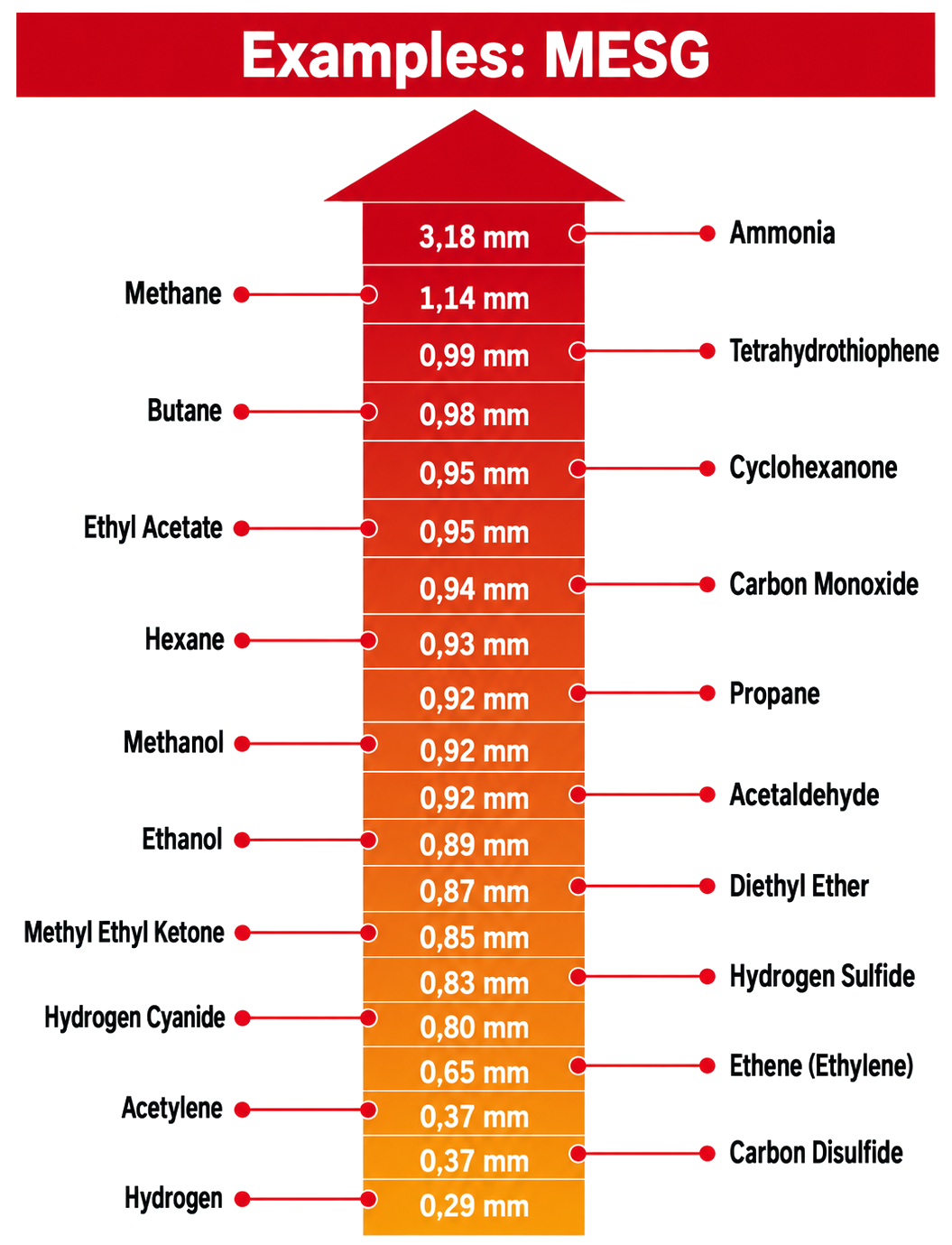
Gas Groups and MESG Examples
The MESG values of combustible gases differ from one another.
This difference is one of the main criteria used to determine whether a gas
belongs to Group IIA, IIB, or IIC.
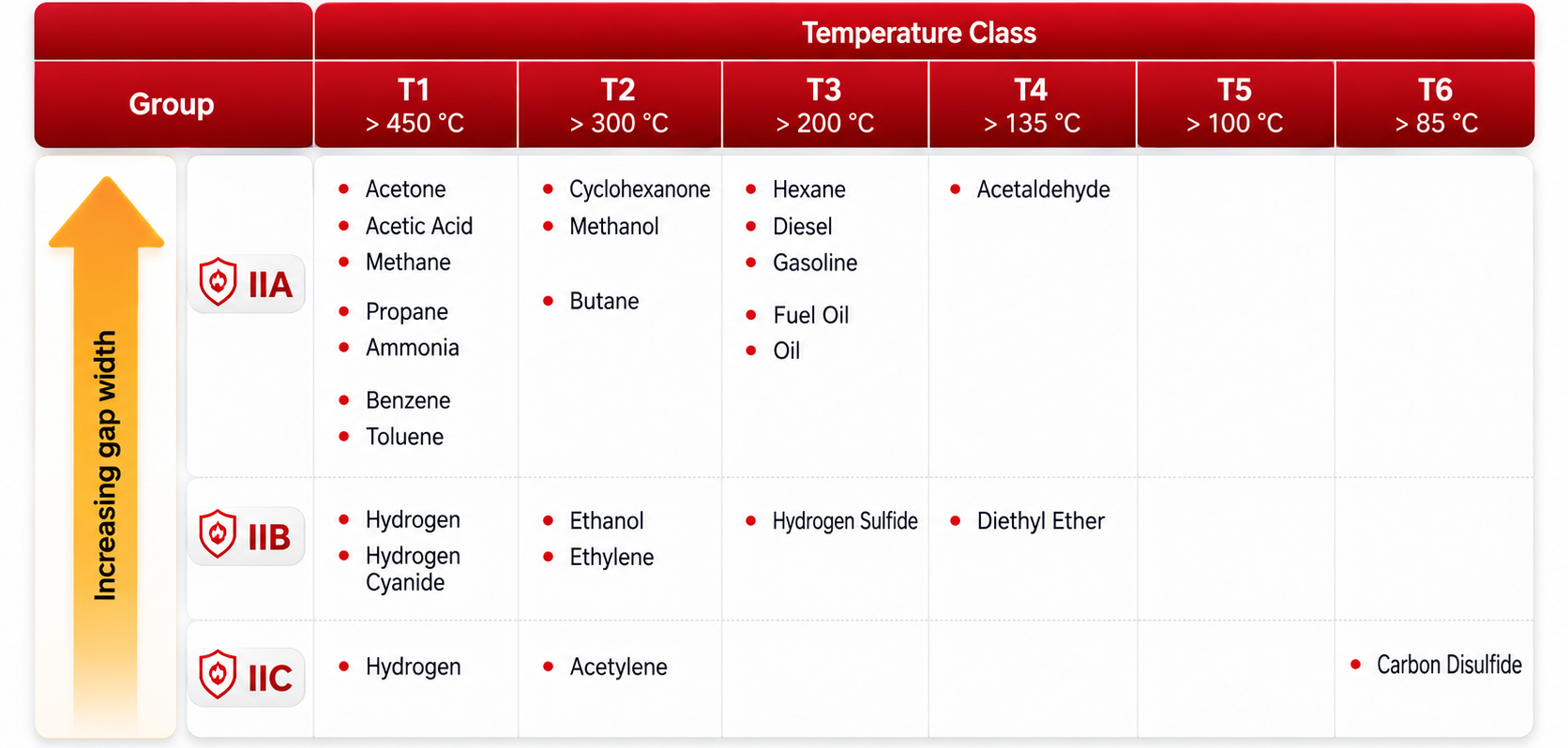
Classification of IIA, IIB, and IIC Gas Groups
The gas group is highly important when selecting equipment for explosive gas atmospheres.
The group classification is based on the ignition and explosion characteristics of the gases.
- IIA: Includes gases and vapors with relatively higher MESG values.
- IIB: Includes substances with lower MESG values than those in Group IIA.
- IIC: Includes more demanding gases and vapors with the lowest MESG values.
In general, as the gas group suitability of equipment increases,
its capability to be used in more demanding explosive atmospheres also increases.

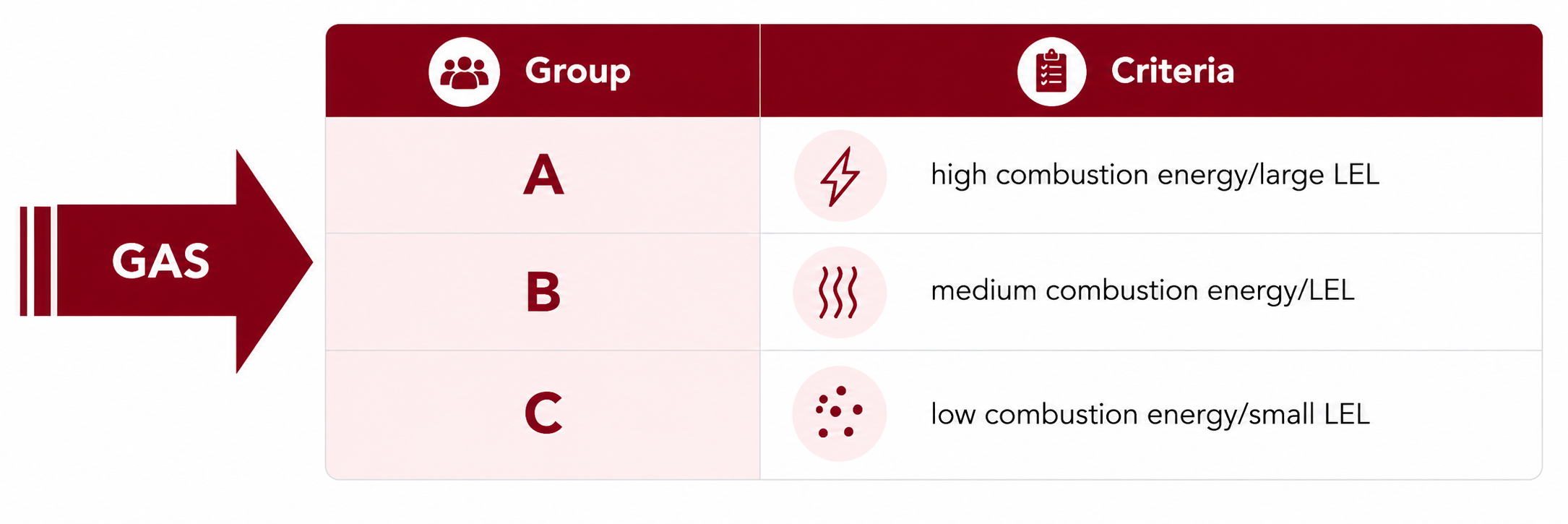
MESG and Ex Equipment Selection
The MESG value is used not only for the classification of combustible substances,
but also for the selection of suitable Ex-proof equipment.
The joint surfaces of the equipment are designed to prevent the explosion
from being transmitted to the external atmosphere.
Example: Solvent Storage Area
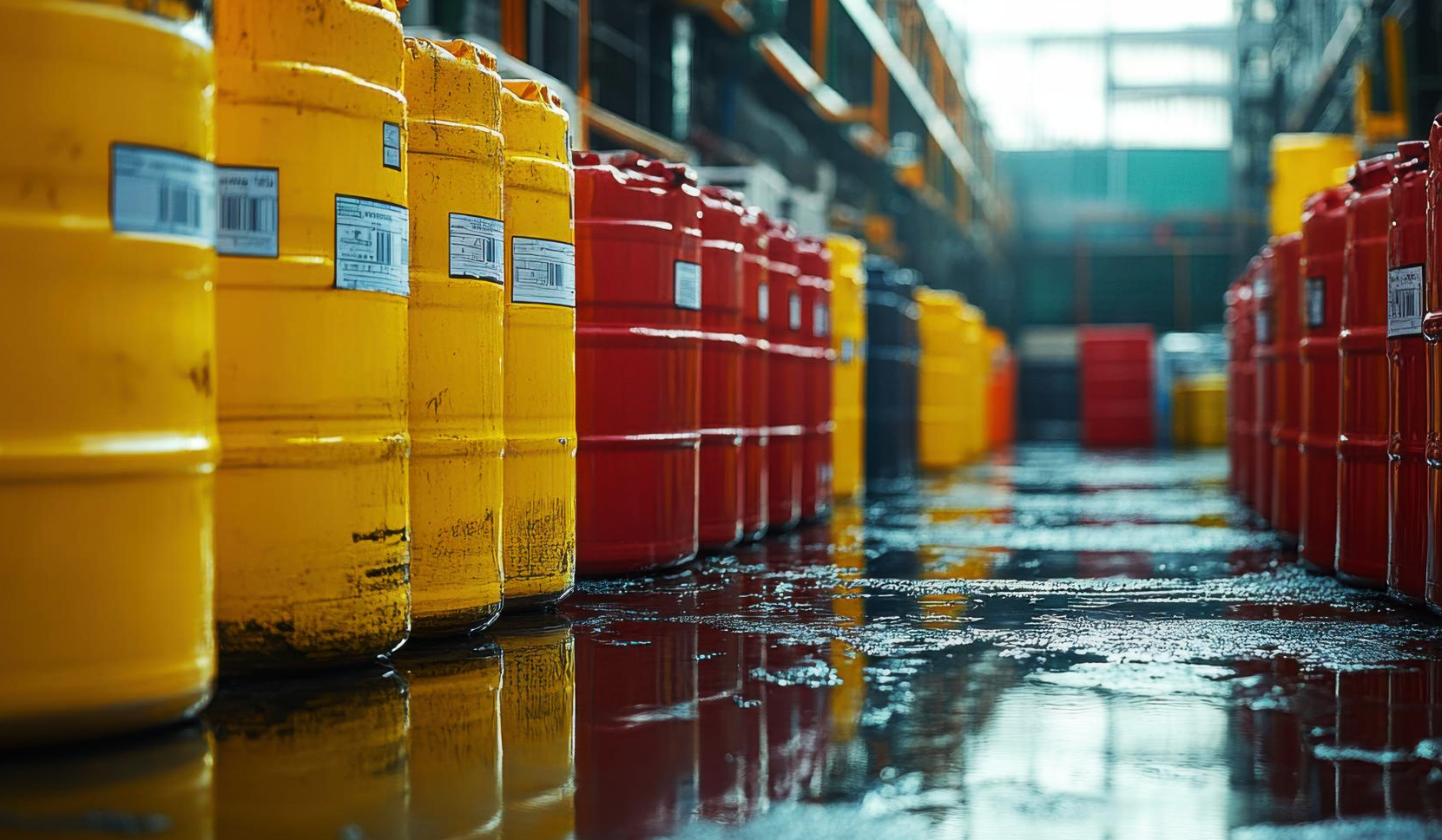
A solvent or combustible gas is classified into a specific gas group
according to its MESG value. For example, some substances may be classified
in the IIC group.
Because hot gases and flames in the IIC group
can pass through even very narrow gaps,
the design of equipment joint surfaces is extremely important.
Example: Flameproof Ex-Proof Lighting Fixture
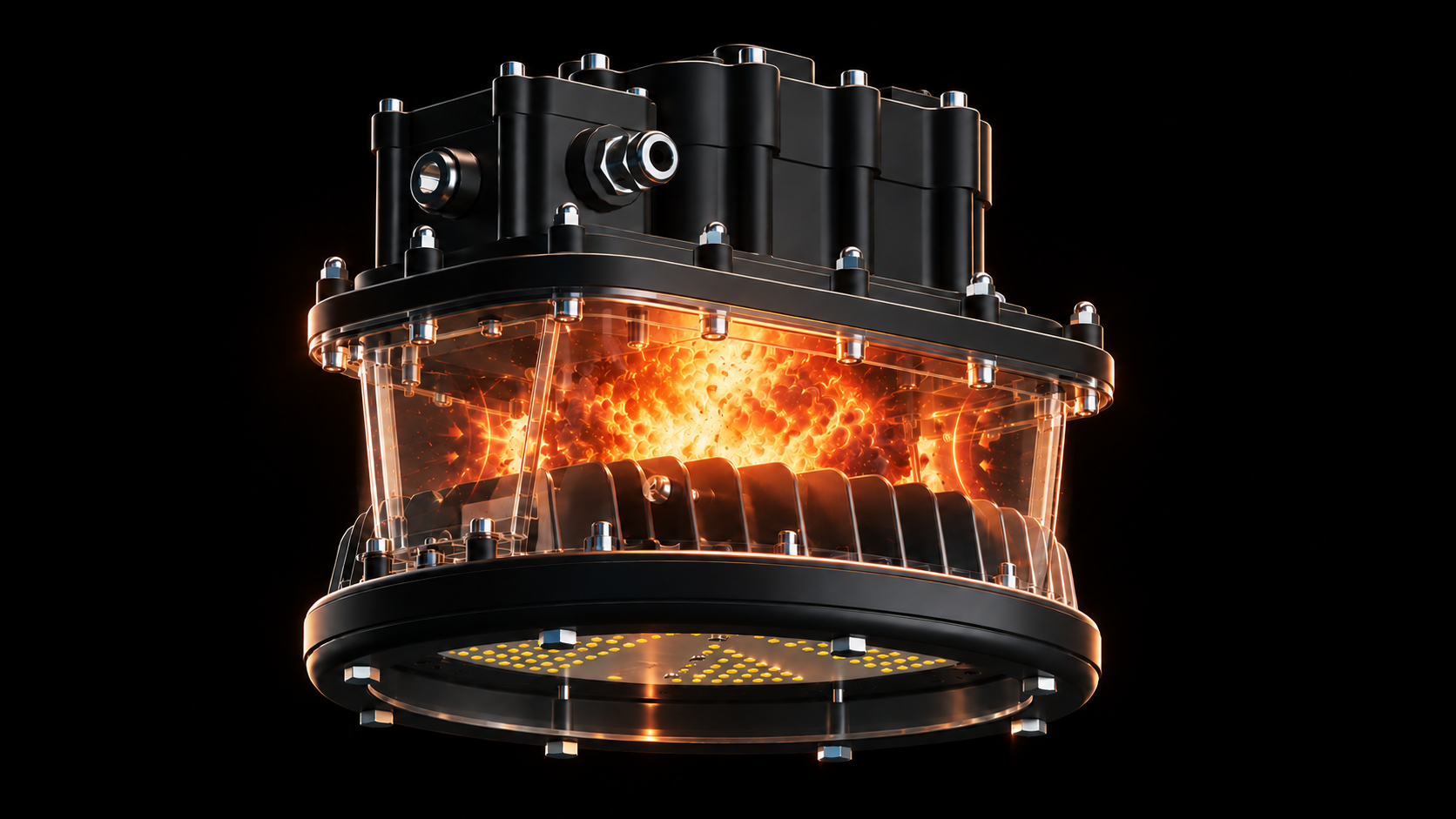
Flameproof Ex equipment is designed to contain
an explosion that may occur inside the enclosure.
The joint surfaces between the enclosure body and cover help prevent ignition
of the surrounding explosive atmosphere by allowing hot gases and flames
to cool sufficiently as they exit the enclosure.
For example, a flameproof lighting fixture suitable for the IIC group
must be designed with joint clearances and flame path dimensions
that comply with the requirements of the IIC gas group.